
 Español
  Français
  Português
  Italiano
 Kospet Magic R10 Review
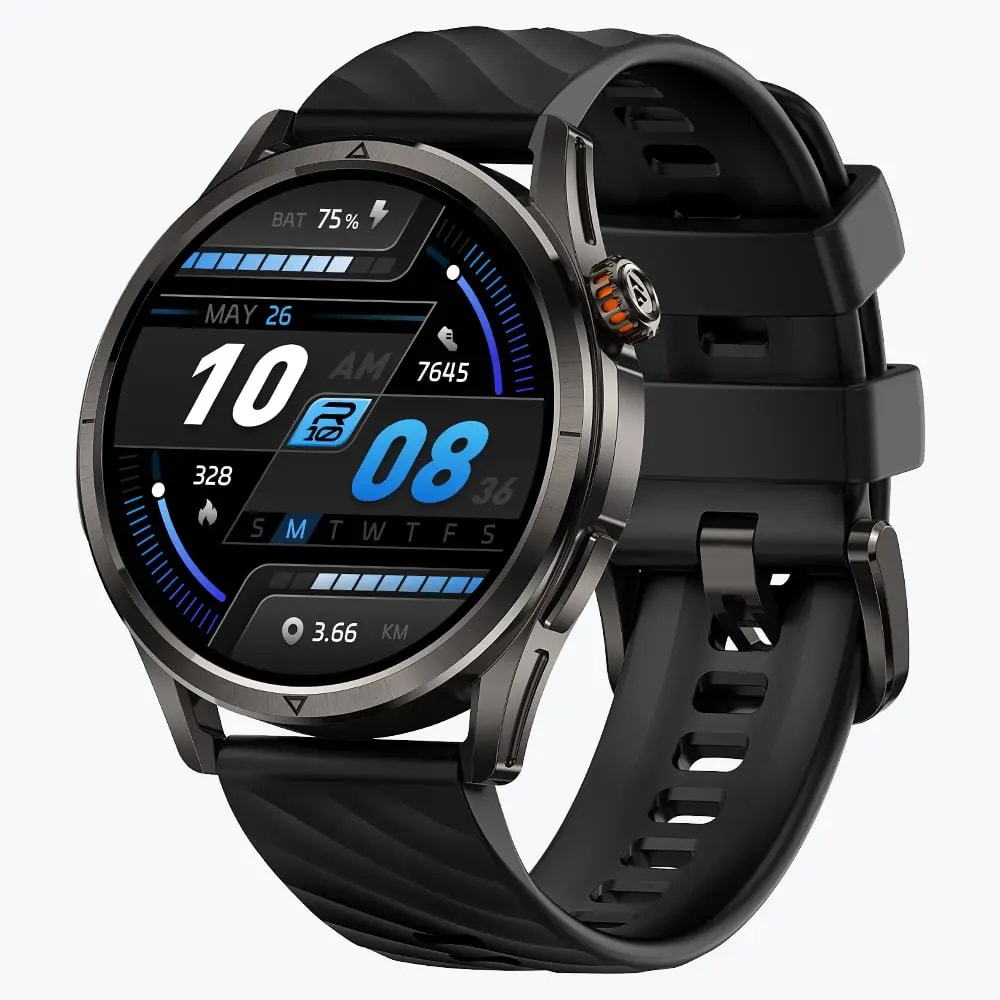
Elegant, dressy sports watch from Kospet with great battery life and heart rate performance
Ratings are contextual to quality band. A 4-star ultra-budget watch and a 4-star midrange watch offer different value propositions.
✓ Pros
- 9-day heavy-use battery life
- Beautiful AMOLED screen with auto brightness
- Great activity tracking
- Good heart rate sensor
- Excellent GPS
- Smooth crown scrolling
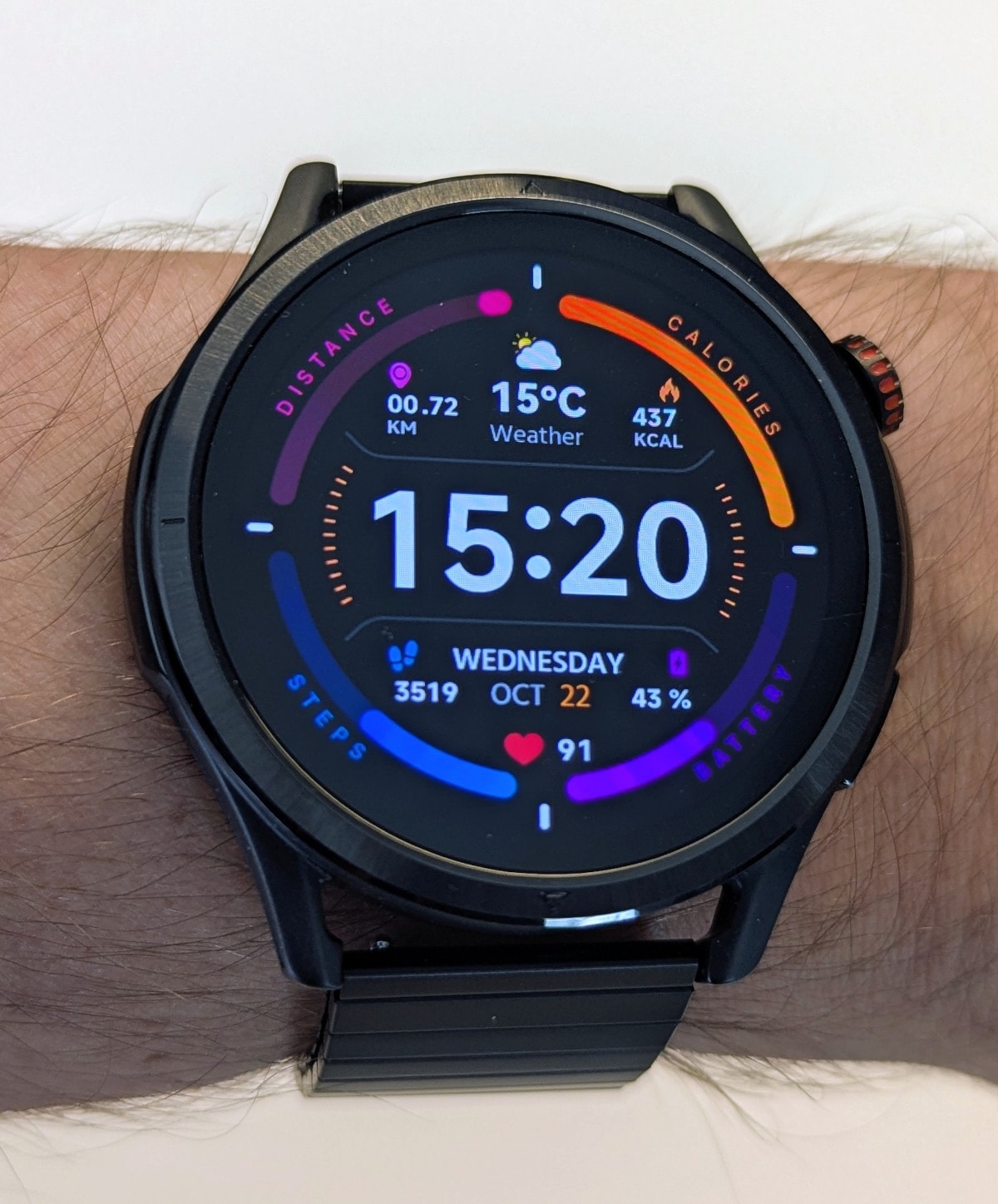
- Excellent watch faces
- Apexmove is a really good control app
✗ Cons
- Automatic brightness is too dim indoors
- Quality control issues
- Raise‑to‑wake is not automatable
Specifications
- Release Date
- Q3 2025
- Price (September 2025)
- £159 / $159 / €159
- Display
- 1.43-inch AMOLED, 466×466, 1000 nits, Corning Gorilla Glass 3
- App
- Apexmove
- Processor
- Actions ATS3085S
- Heart rate sensor
- VC9213-4PD
- SpO2 sensor
- VC9213-4PD
- GPS
- Dual-band (L1+L5), 6 Satellite Positioning Systems
- Battery capacity
- 450 mAh
- Battery life
-
- Typical: 12-13 days
- Heavy: 8-9 days
- AOD: 3-5 days
- Continuous GPS: 15-16 hours
- Review: 9 days
- Water Resistance
- 5 ATM & IP69K
- Bluetooth version
- 5.3
- Weight with included silicone strap
- 67g
- Dimensions
- 46 × 46 × 12 mm
- Watch band type
- Standard 22mm lug width
- Features
-
- Heart rate
- SpO2
- Sleep tracking
- Step counter
- One-tap health check
- Breathing exercises
- Menstrual cycle
- Bluetooth calling
- Phone notifications
- Weather forecast
- Phone assistant
- Phone music control
- Timers
- Stopwatch
- Alarms
- Camera shutter
Box contents
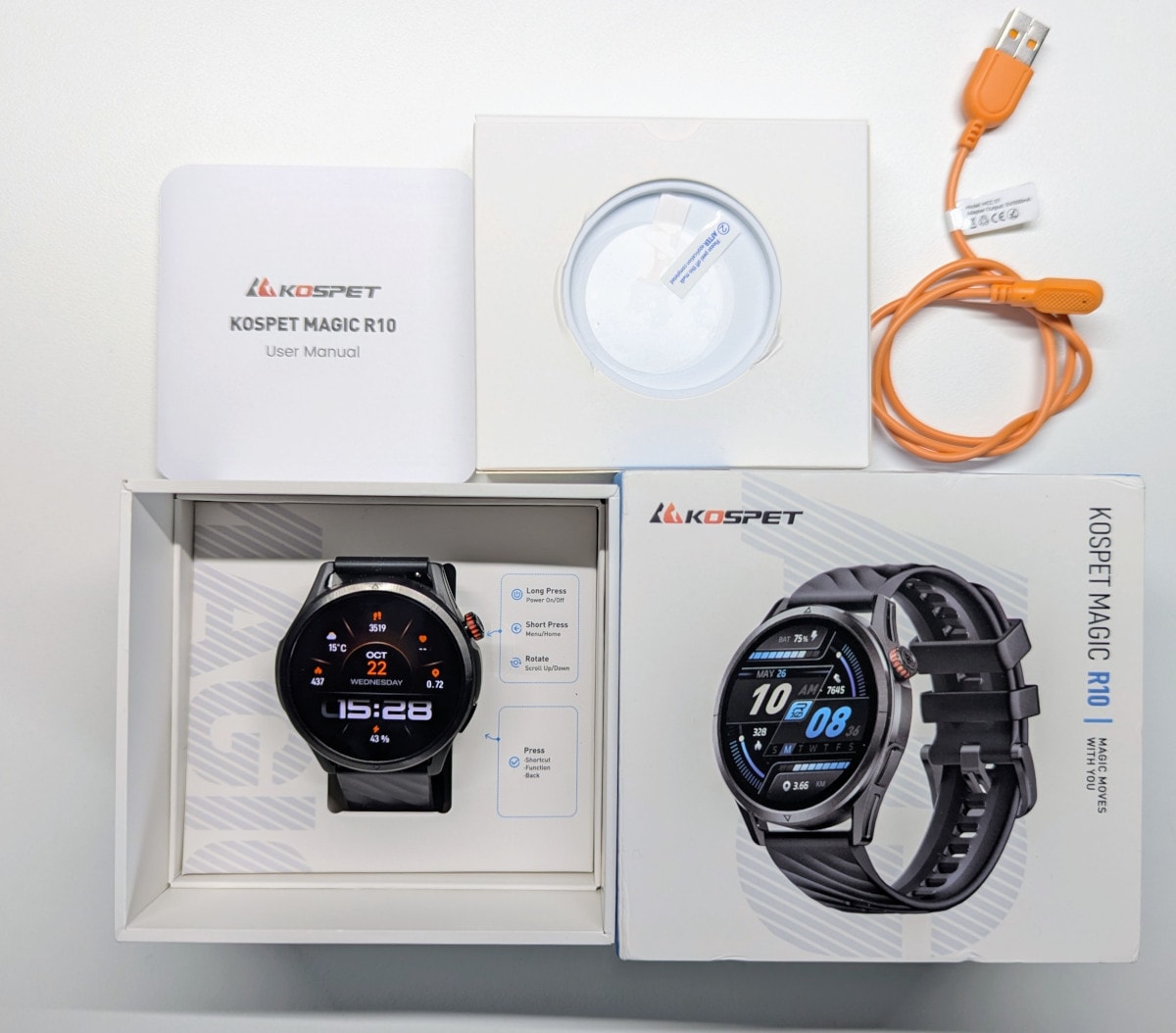
As with the Kospet Pulse, the packaging is excellent: a sturdy box with the watch (strap pre‑installed), charging cable, manual, and a screen protector film.
Design and Build Quality
The Magic R10 is compact and lightweight, with a stainless‑steel body and a polymer back. The black review unit looks elegant and understated despite its 46mm case and 12mm thickness.
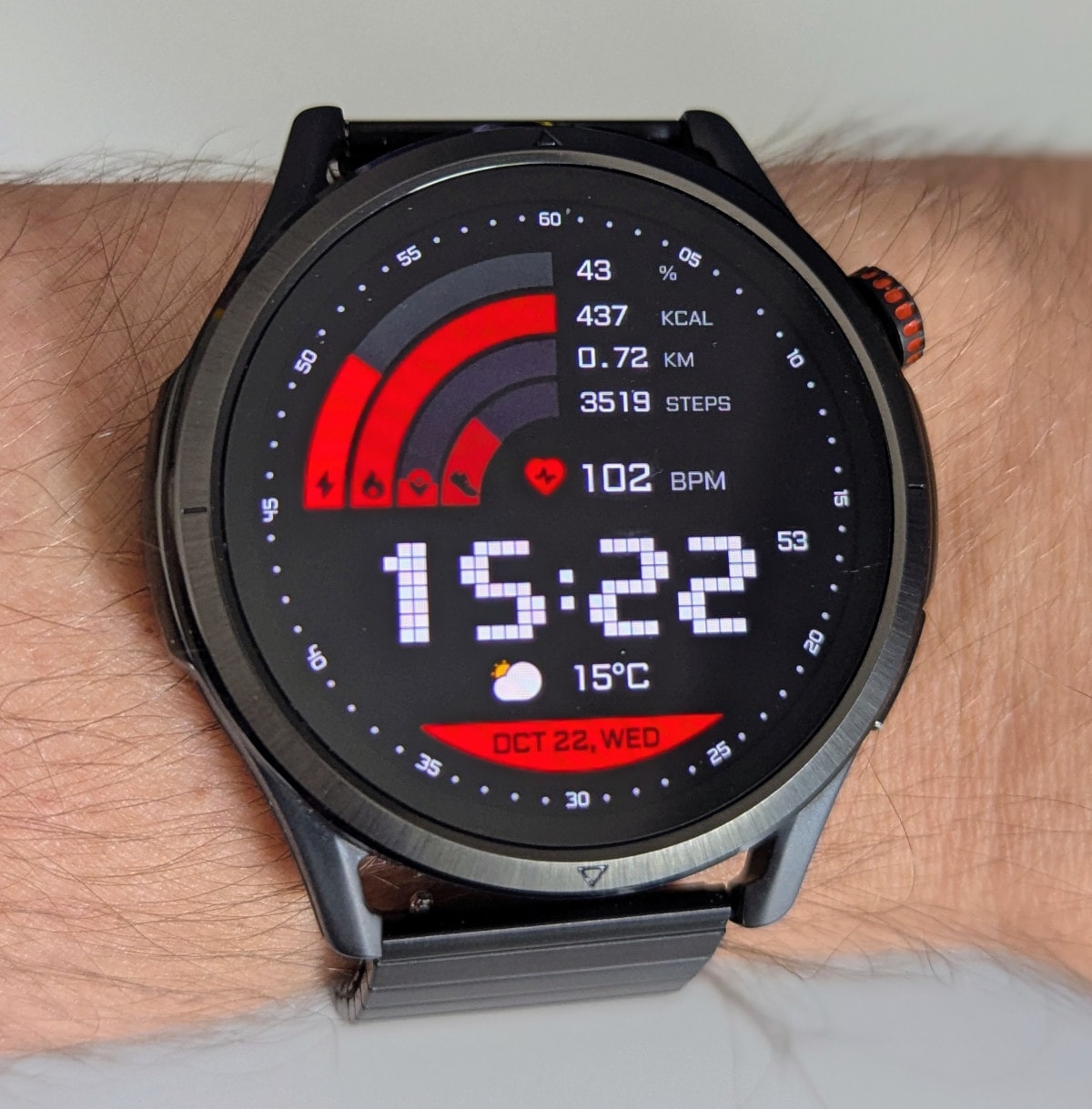
The design clearly takes cues from the Amazfit Balance 2 - a theme that continues in the firmware, again based on GloryFitPro but with notable improvements.
At 67 g with the liquid‑silicone strap, it’s comfortable for all‑day wear and even sleep. The strap is soft and flexible, and the strap hole spacing allows a snug fit. Rounded edges throughout, especially around the sensor bump, also add to the overall comfort when wearing this watch.
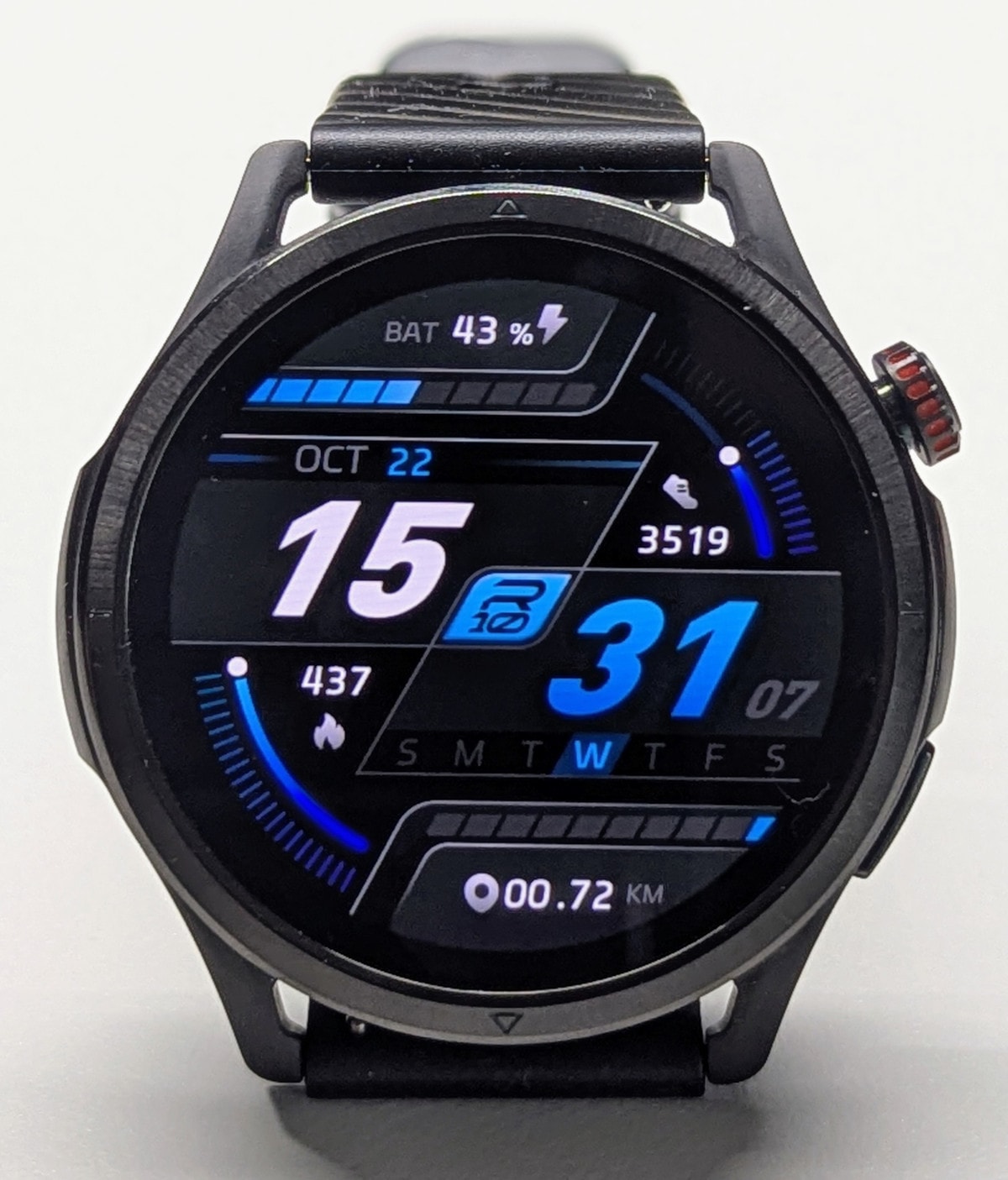
The glossy polymer back is easy to wipe clean. New to these Kospet models (P10 included) is a Fresnel lens over the upgraded heart‑rate sensor.
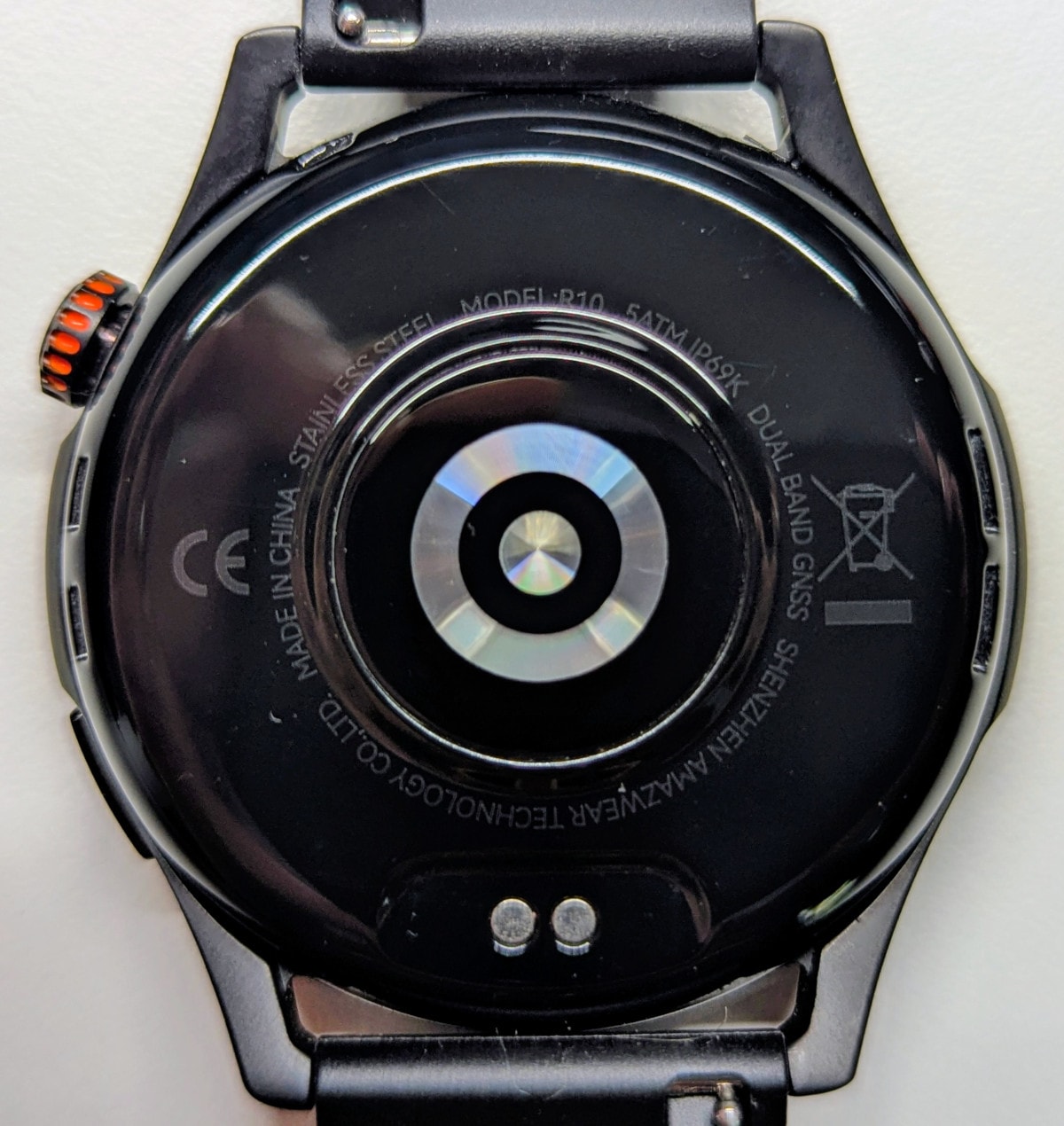
On the right are two buttons: a rotating crown and a standard clicker. The crown’s orange accents look great and it rotates/clicks smoothly, just like on the Kospet Pulse.
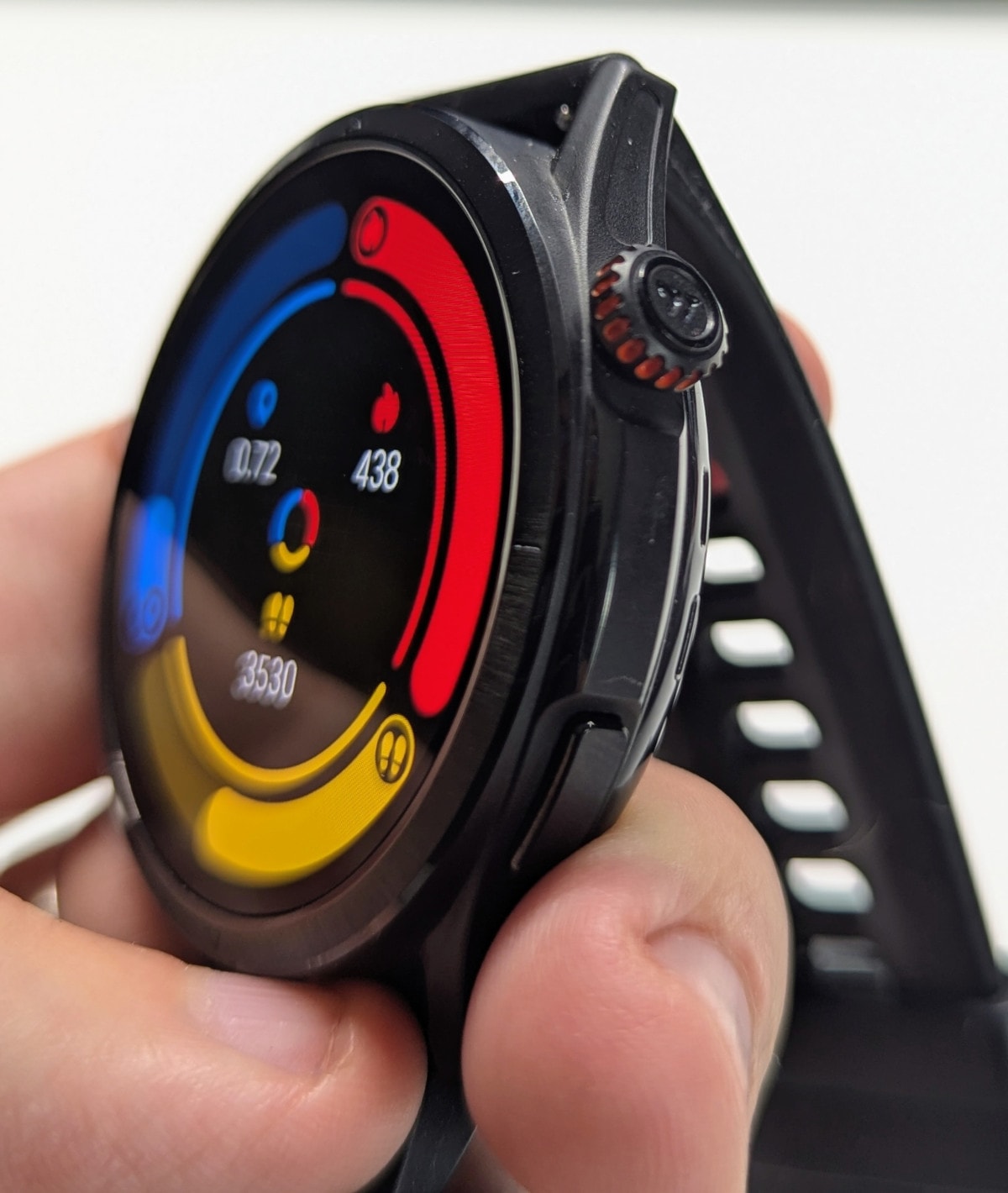
Hardware is a clear step up: Kospet finally uses the ATS3085S MCU, bringing stronger graphics, higher clocks, and more memory. This is both felt and seen when using the watch interface, making for a much more pleasant experience.
Unfortunately, my retail review unit has two defects that, while not affecting functionality, are annoying:
- The bottom button sticks when pressed off‑center
- The display is misaligned by about a degree clockwise - I hadn’t noticed during a month of daily wear until I started photographing it for the review; now I can’t unsee it.
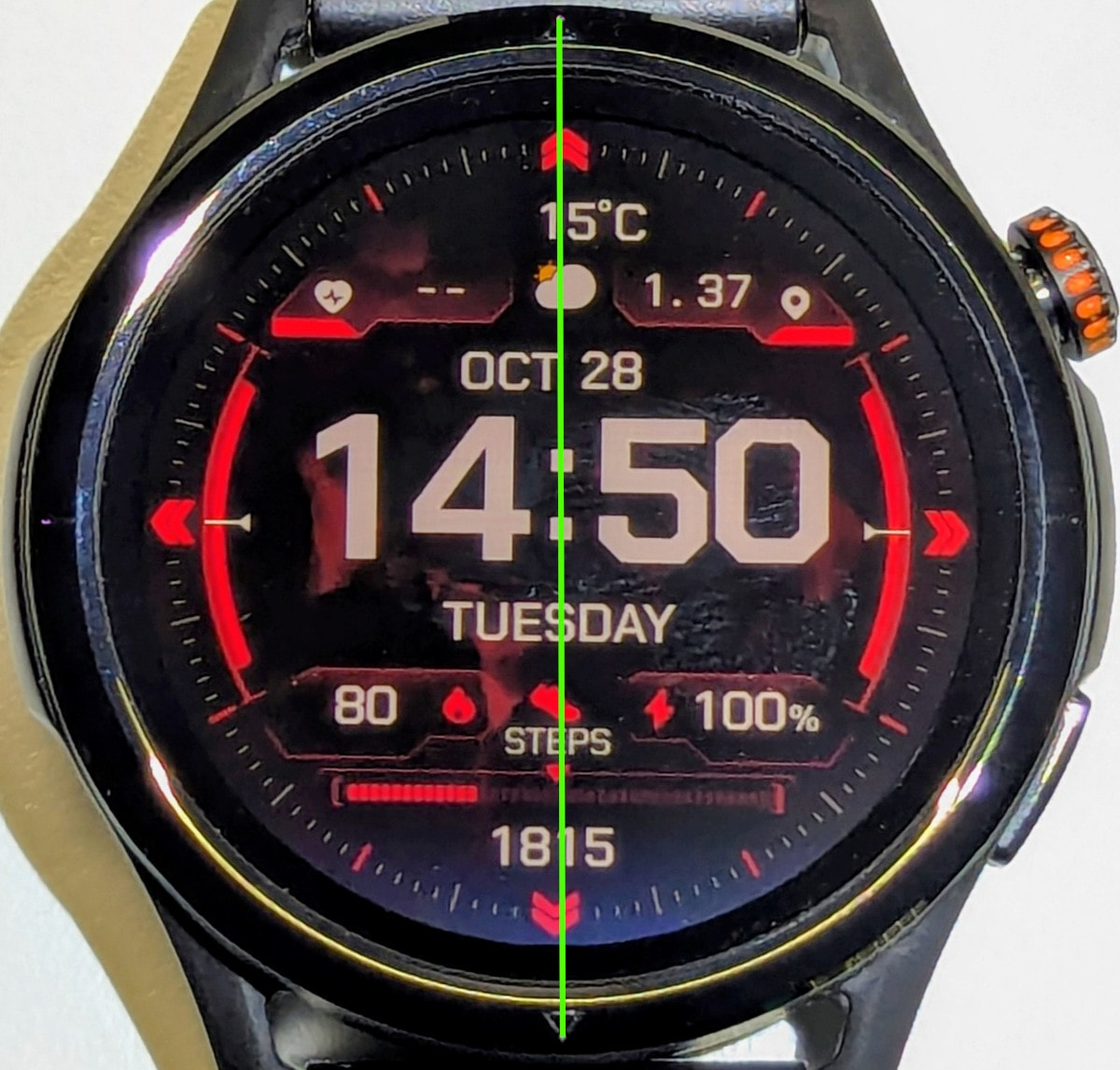
A shame, because materials and design are otherwise excellent; quality control needs tightening to avoid issues like these.
Display & automatic brightness
The 1.43‑inch AMOLED is bright and punchy. Its 1000‑nit peak keeps it readable in direct sun and even with polarised sunglasses. At 466×466, text and graphics look crisp. There’s a noticeable bezel around the edge, which is a shame as seeing as the space is there, Kospet could have fitted potentially a 1.5-inch display instead
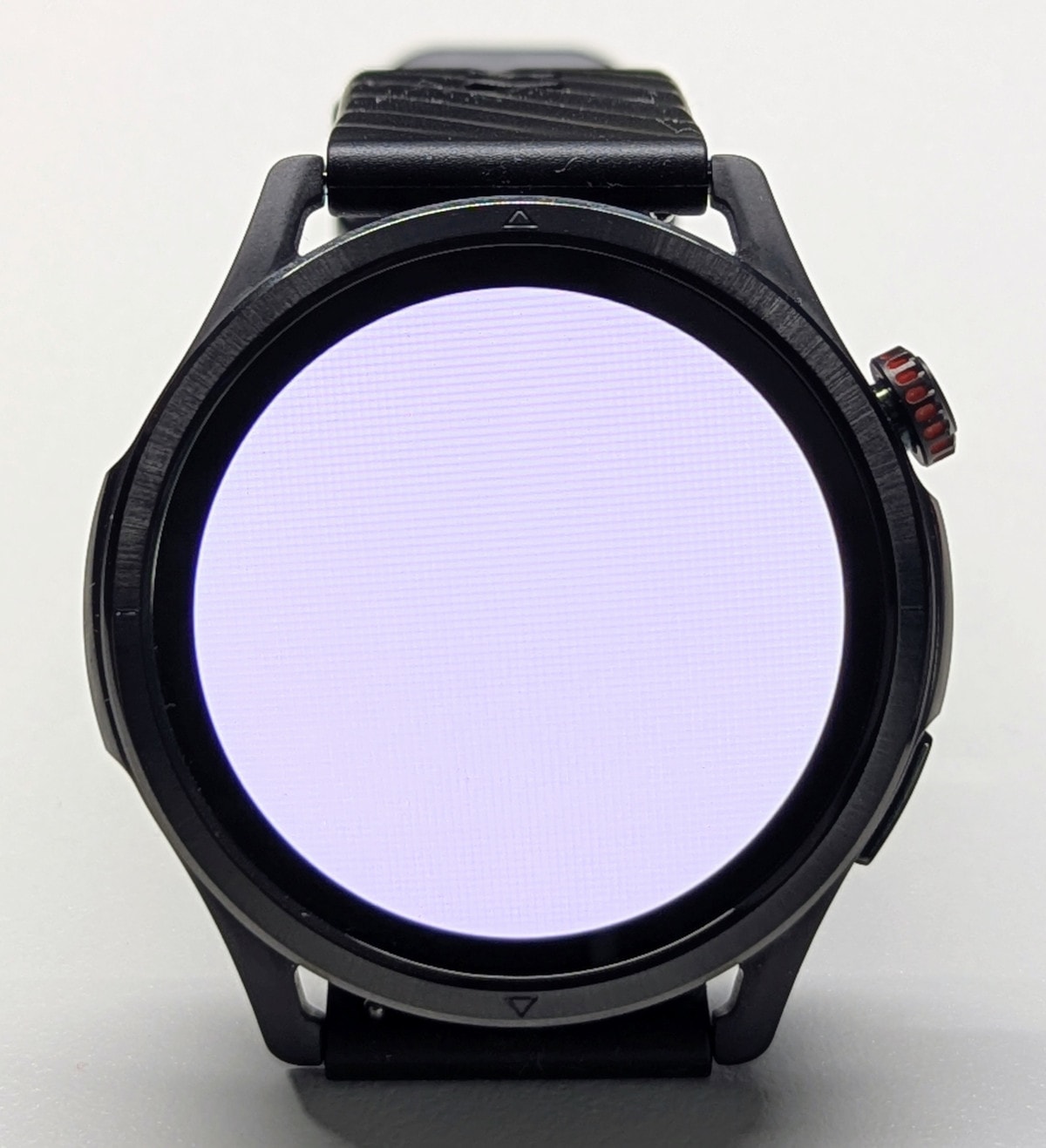
It’s covered by Corning Gorilla Glass 3 and sits slightly recessed from the bezel to help avoid scratches when placed face‑down.
Always‑on display is supported, but it hurts battery life considerably. Raise‑to‑wake is very responsive and far more efficient - that’s what I used without issues.
Screen protectors are easy to find (39/40 mm is the sweet spot), although on this occasion I didn’t fit one so as not to interfere with the ambient‑light sensor.
New to this lineup is automatic brightness - a welcome addition that saves power and is convenient outdoors where lighting conditions vary.
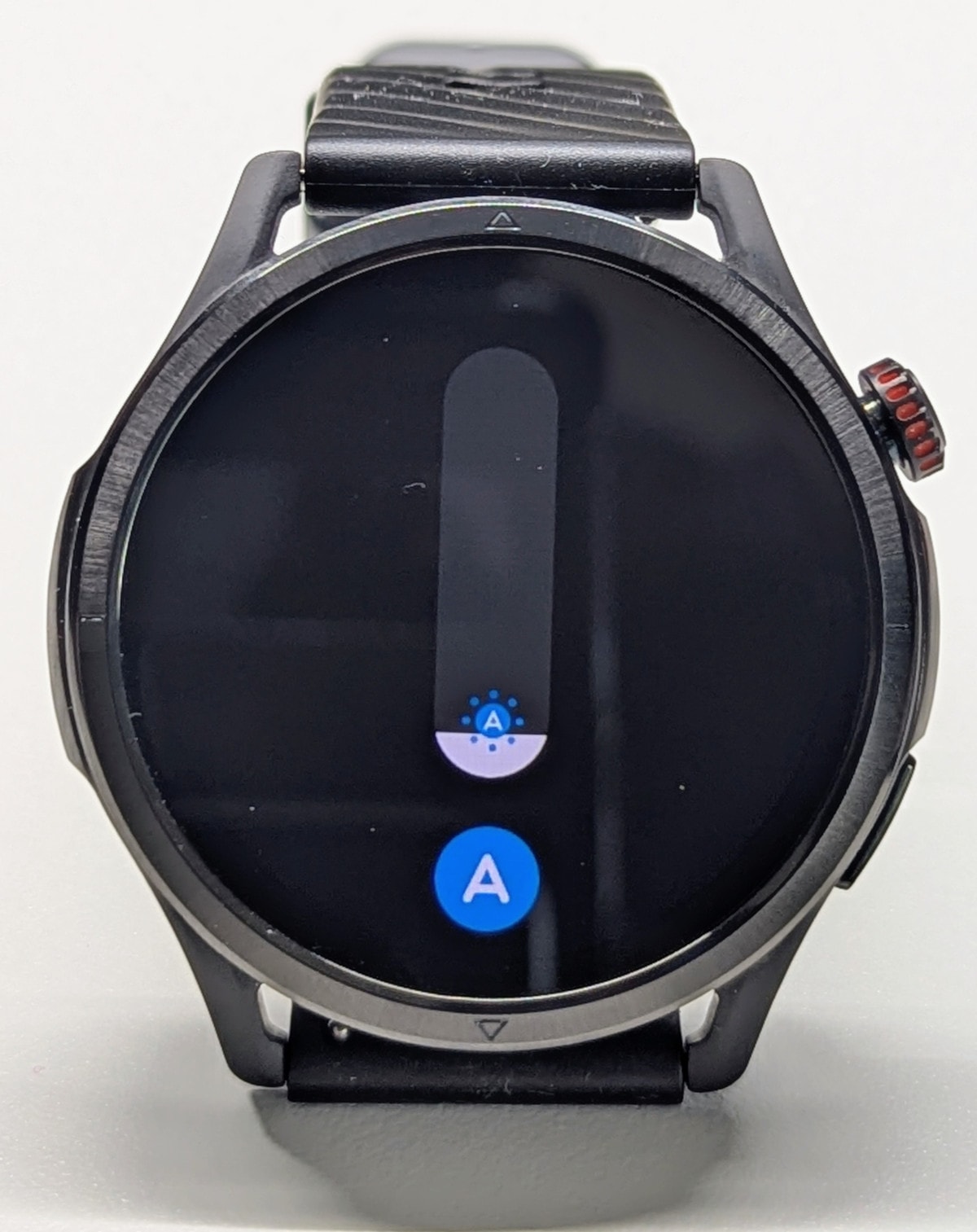
Unfortunately, I found the calibration of the sensor to be off, erring too much on the side of caution. Brightness indoors will often self-regulate all the way to minimum when the sources of light are indirect, making the screen hard to see under moderate lighting conditions. Conversely, under direct sunlight, brightness would often stop short of the maximum setting by about 10%, although this wasn’t so much of an issue.
As a result, I usually disabled auto‑brightness indoors and set around 20%, then enabled it outdoors where it works well enough. Other systems let you set a baseline (e.g., my Pixel Watch offers three auto‑brightness levels). It seems like an easy software tweak, and I went ahead and suggested this to Kospet, but unfortunately I never received acknowledgement.
Watch interface
The Kospet R10 runs a variant of the GloryFitPro firmware. The old Kospet Fit app was a customised fork that once shared the same watch‑face catalogue (no longer true with the new app; more below). The OS is feature‑rich - one of the best in this class.
The UI is intuitive, polished, and relatively smooth thanks to the newer Actions ATS3085S MCU. Users of Amazfit devices will feel right at home, as it’s clearly been inspired by it.
From the watch face, a down swipe opens editable quick settings with lots of genuinely useful toggles:
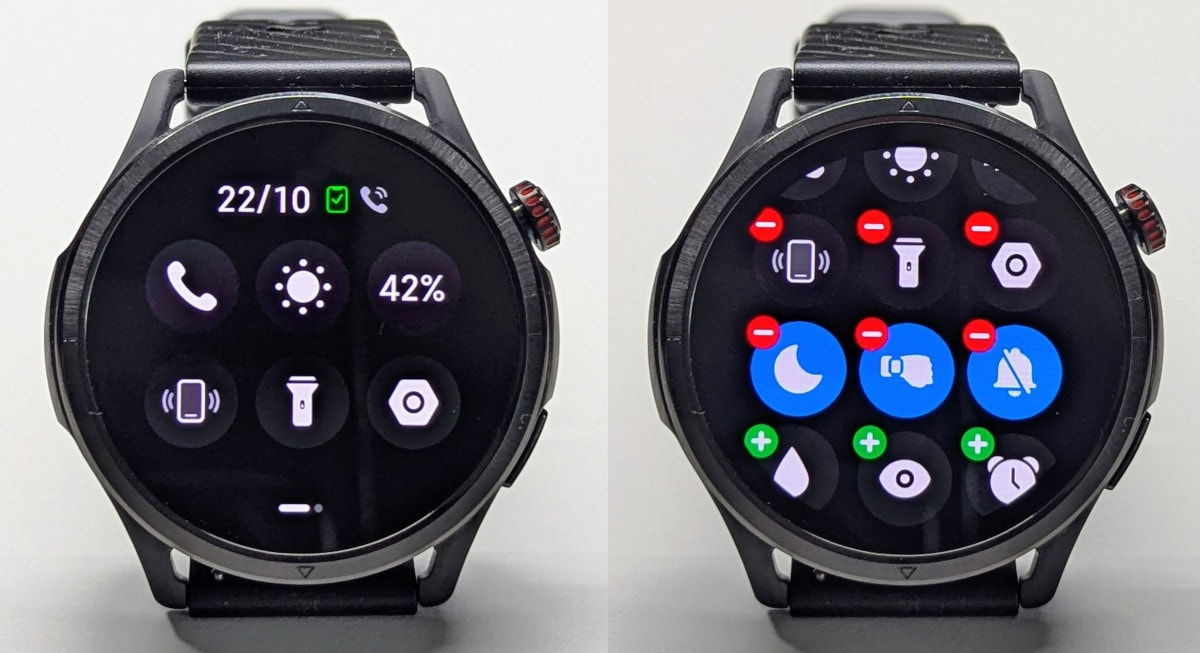
Swiping left shows a selection of app screens - activity rings, weather, heart rate, etc. These aren’t cut‑down views but the actual apps, and the list is configurable. Transition effects are also configurable, and very smooth.
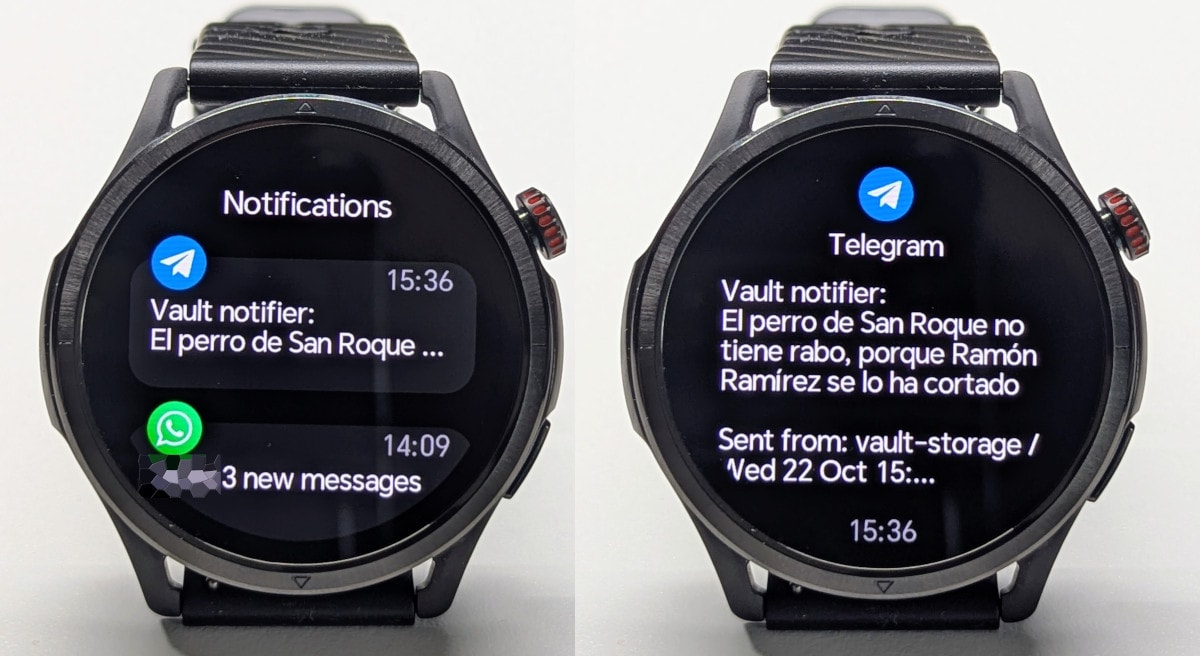
A right swipe shows notifications. They’re grouped by app, for a list of specific primary apps that the watch has icons for, and everything else lands as “Other”. They mirror your phone’s notifications, showing about a screenful before truncation. I wish they scrolled to show more and took advantage of the excellent crown. Apexmove lets you select virtually any installed app on your phone to relay notifications.
Swiping up opens the cards panel for daily activity, heart rate, sleep, timers, and more. It’s the best way to use most apps, and you can reorder or remove cards to suit your needs.
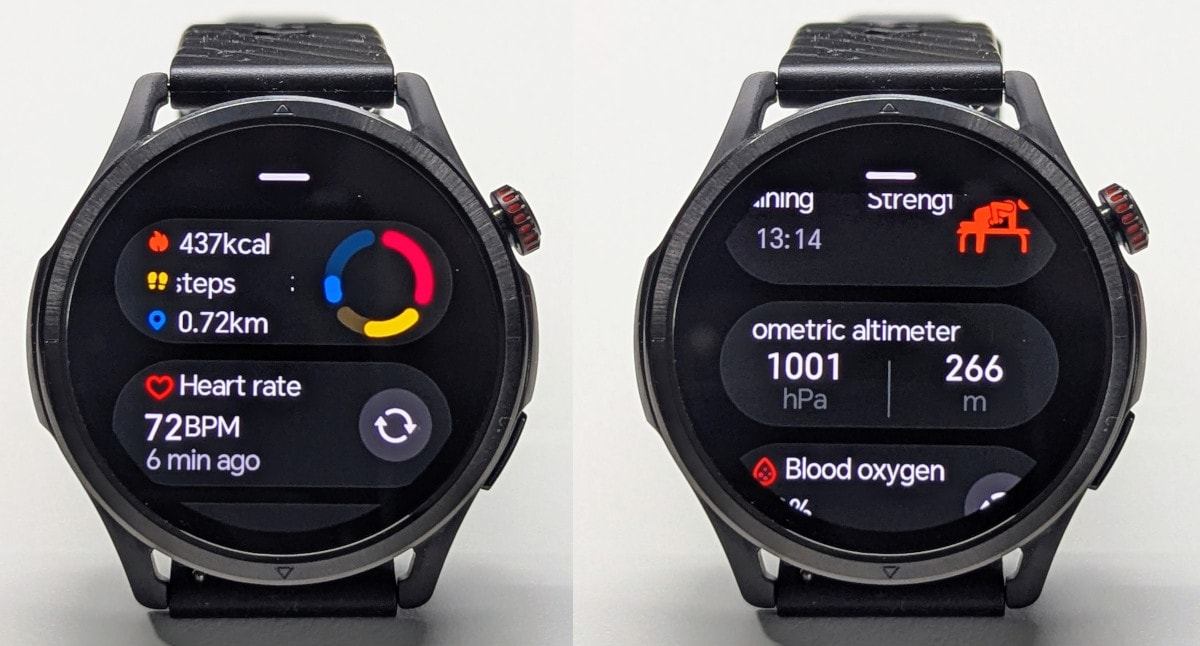
Note: some settings are buried inside individual apps on the watch (e.g., finer heart‑rate options). Open the app on the watch and scroll to the bottom to find them.
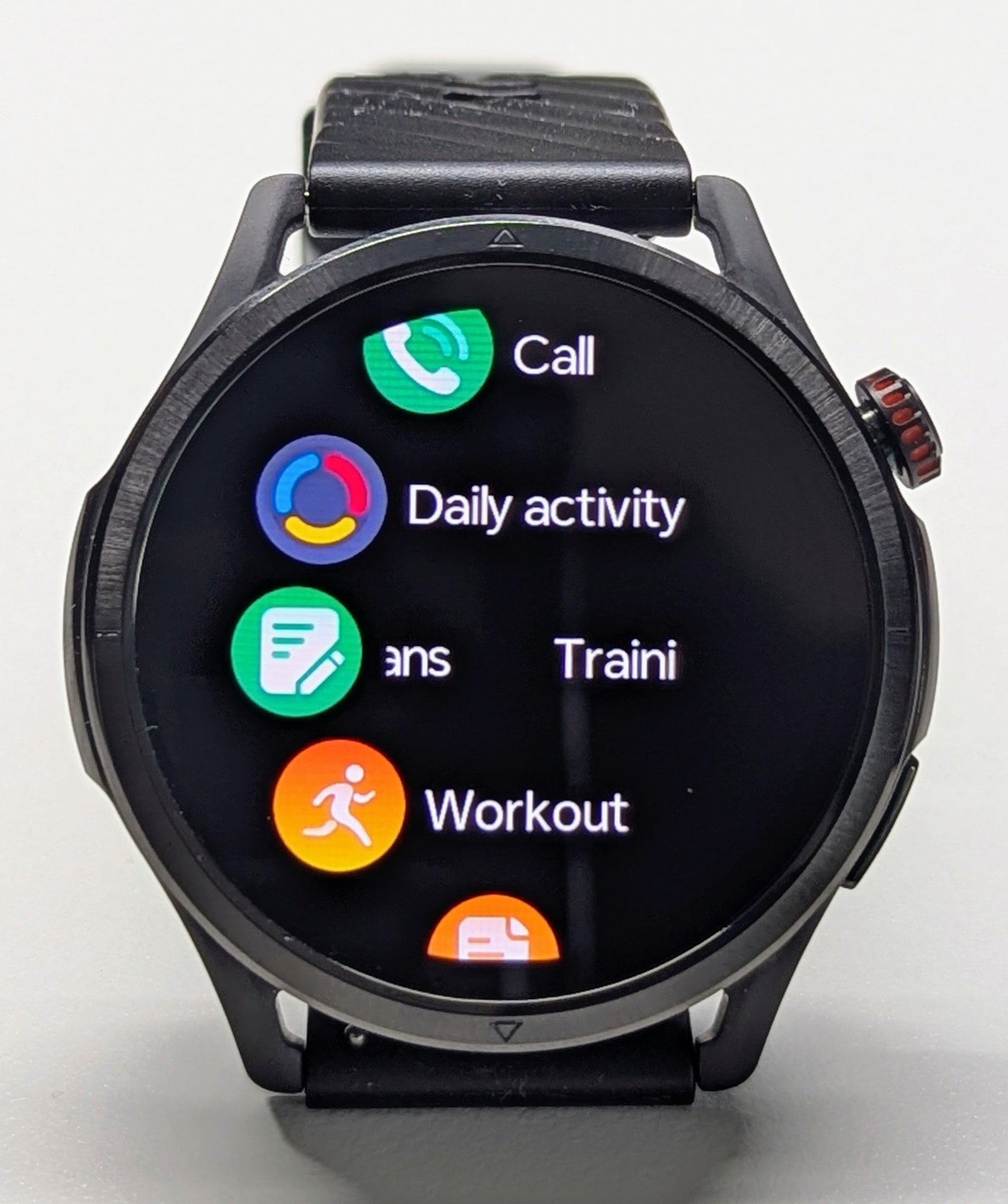
Clicking the crown opens the apps menu. There are several menu styles (grid, etc.), but list view is the fastest because it shows names for everything on screen and you don’t need to play an icon-guessing game. The sort order seems semi‑random and isn’t configurable. Not a big issue, as the watch does not have a huge number of apps installed.
Watch faces
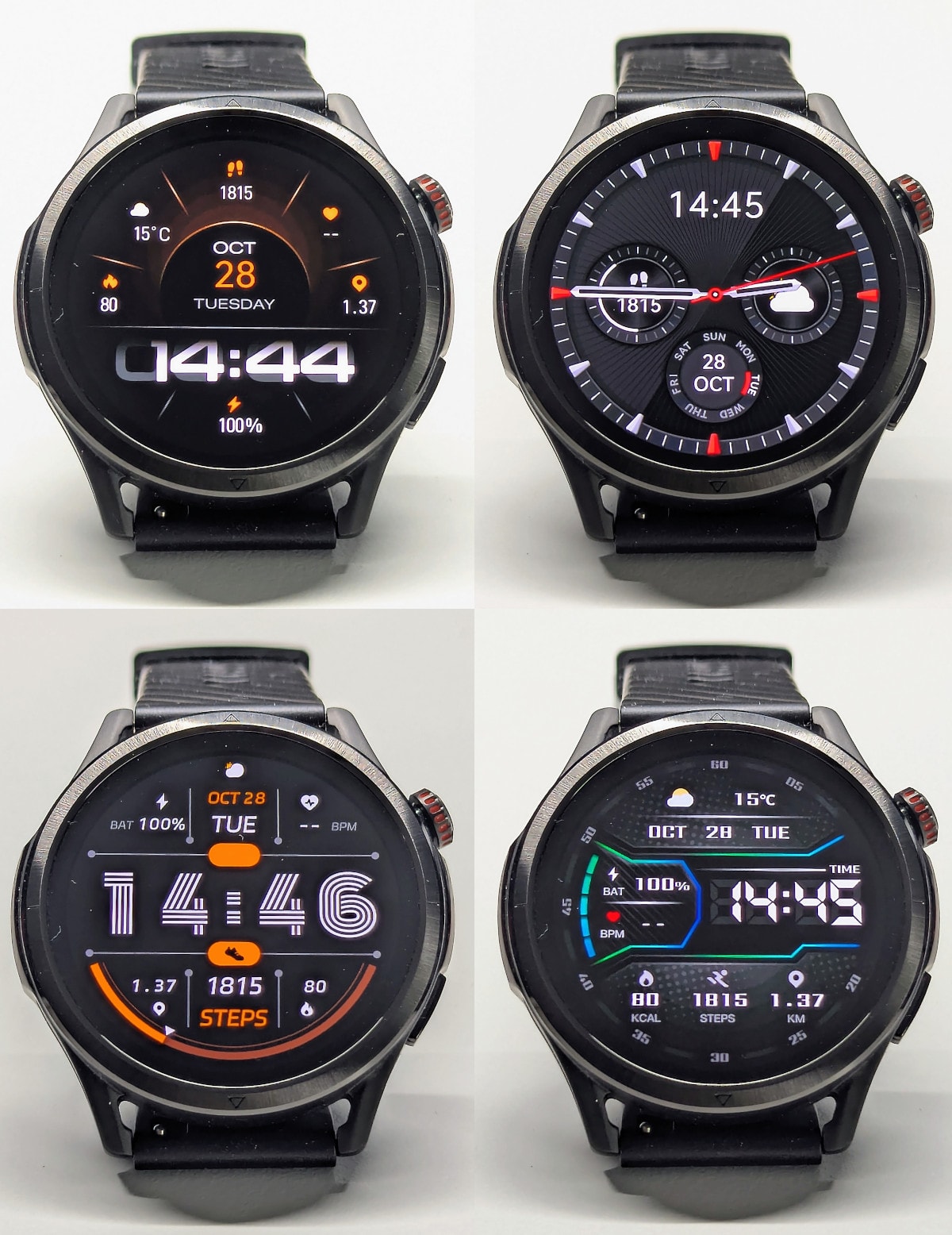
The watch comes with 10 preinstalled watch faces that cannot be removed, another customisable watch face you can configure with a custom background on the app, and the watch allows you to install a further 4.
The selection on the app is ample, and in fact you can really tell Kospet has invested a lot of resources into furnishing the new app with a really, really good selection of new watch faces that you wouldn’t find on GloryFitPro / Kospet Fit.
Here are a few examples of default and downloaded watch faces:
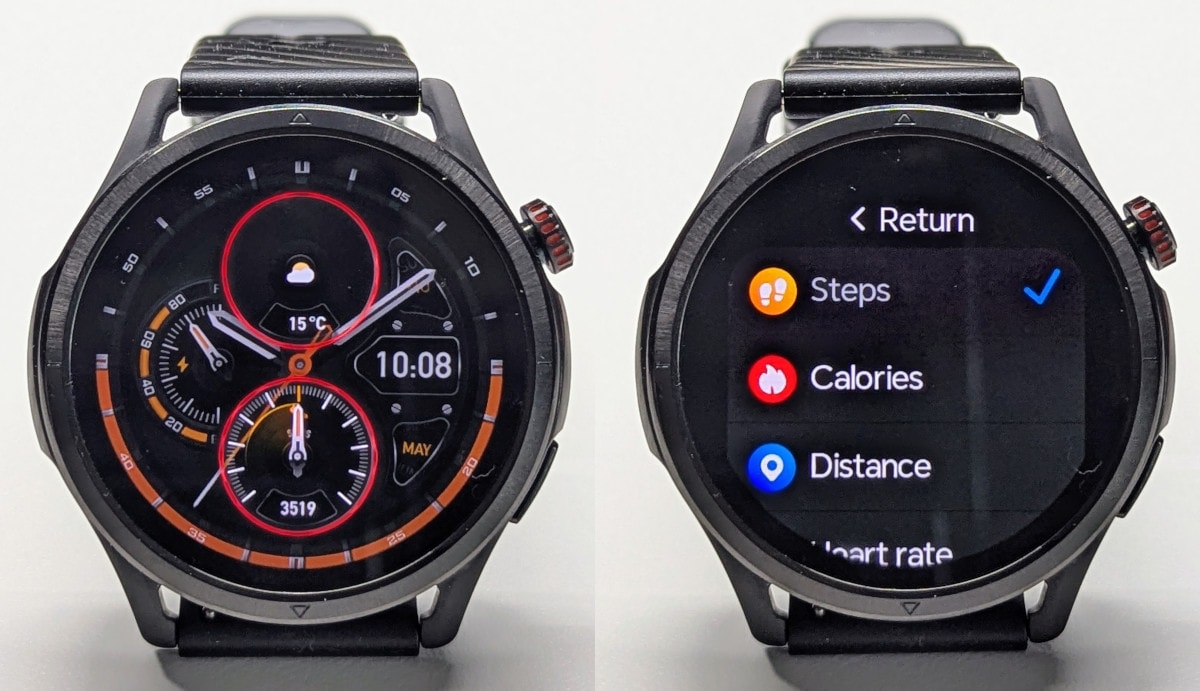
New to this series is the ability to customise some of the complications in some of the included watch faces - on those, you’ll find a pen icon to enter edit mode:
Some watch faces, especially the bundled ones, come with their own AOD version:
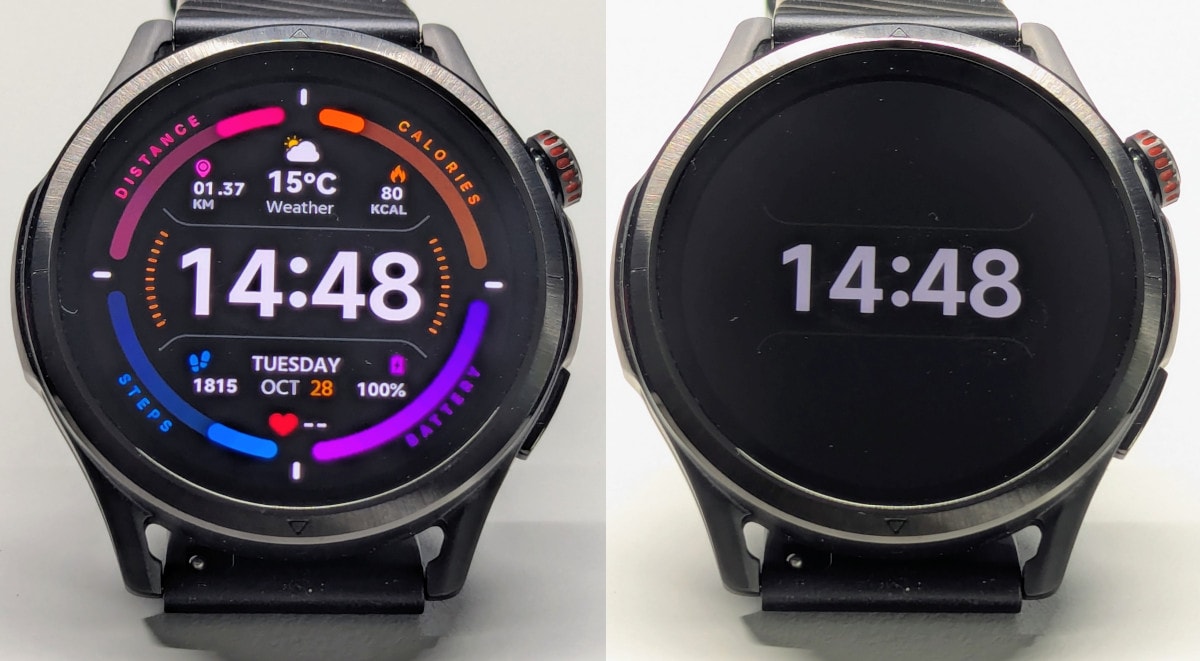
For those that don’t have AOD, the watch face will simply show a random AOD watch face from the (separate) pool of AOD watch faces.
Battery Life and Charging
Battery life is a strong point of the Kospet Magic R10. I’m a fairly heavy user - GPS‑track all my walks, work out regularly, check notifications often, and use timers a lot. I don’t enable AOD, but I do keep raise‑to‑wake on.
During the review, this usage yielded about 9 days per charge, including roughly 6 hours of GPS activity per full charge. That’s excellent performance, considering the mid‑size 450 mAh battery. With AOD enabled, however, battery life drops to just over 4 days.
Charging takes about an hour, depending on the charger. And speaking of chargers, you need to avoid fast chargers; the manual recommends 1000 mA or less. I usually use a laptop USB port to stay within the safe range.
Health Monitoring
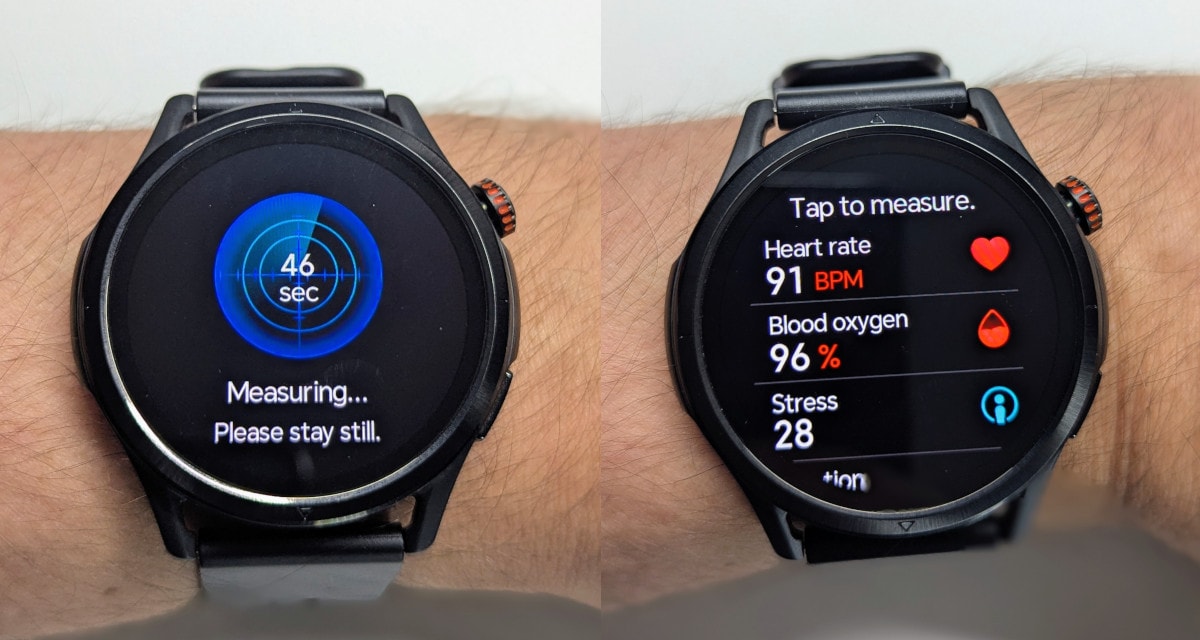
As with other watches, the Kospet Magic R10 covers the basics: 24/7 heart‑rate tracking, blood‑oxygen (SpO2), and sleep tracking - plus a few more dubious extras like stress and “emotional state.”
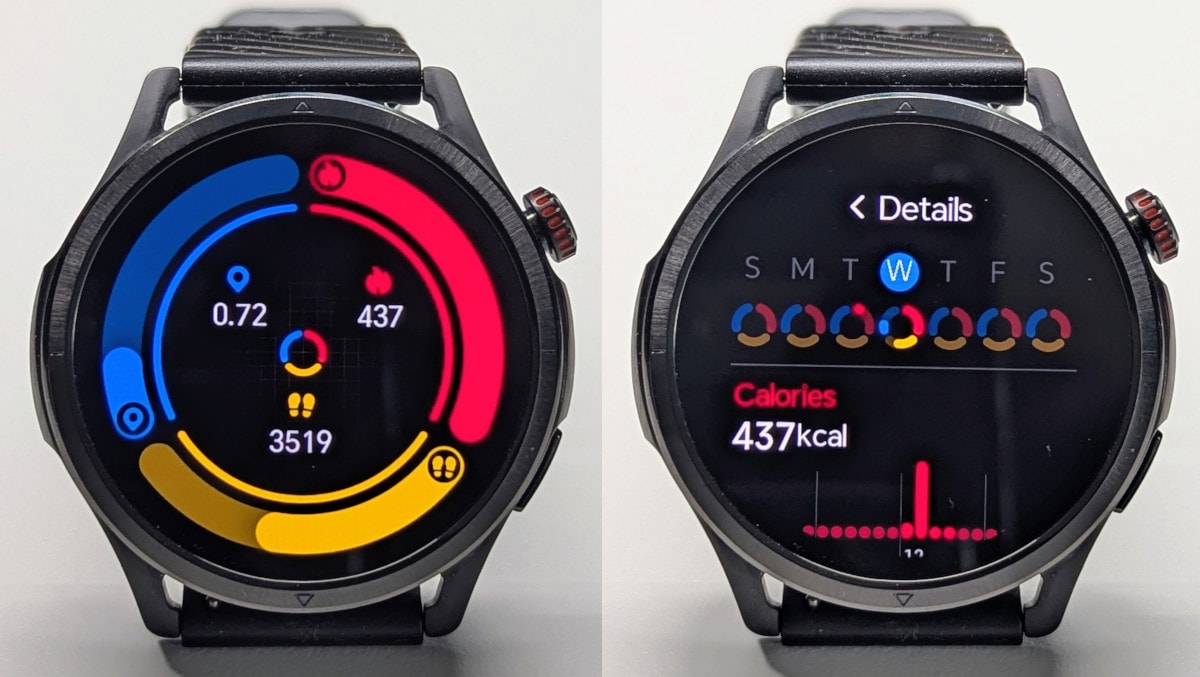
Heart rate and SpO2
For heart‑rate sensing, the watch uses the VC9213‑4PD (PD: photodiode, the actual sensing component) sensor from VCare (the same company behind the troublesome VC30F‑S on GloryFitPro watches; see the K67A review). It inherits some of that sensor’s quirks - namely brief high readings when it first turns on.
However, it’s markedly better than the VC30F‑S and a clear step up from the 2‑PD VC9202+VP60A2 in the Kospet Pulse and the Tank T3 / M3 series. The four photodiodes cut lag and jitter, yielding better tracking during non‑steady cardio (e.g., strength training).
This generation also adds a Fresnel lens over the sensor - a welcome upgrade. You can see the new layout below: LEDs in the center, four photodiodes around them.
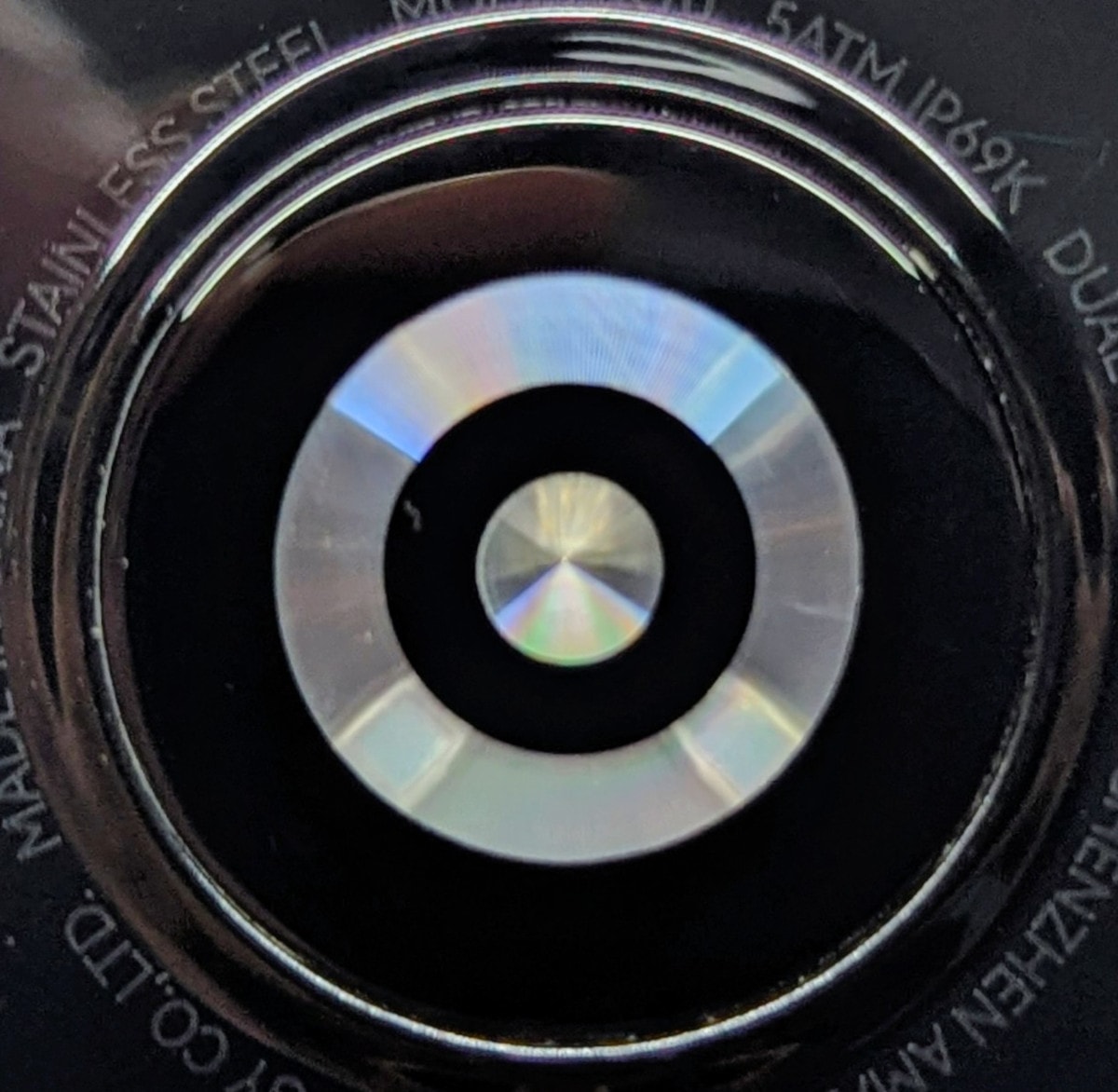
Both heart rate and SpO2 all‑day monitoring run on a configurable interval (5–60 minutes). The heart‑rate sensor also wakes when the screen turns on to provide live readings if your watch face has an HR complication.
You can’t set continuous HR, which would avoid cold‑start spikes and improve tracking at the cost of some battery life - a trade‑off I’d gladly take. Still, Apexmove smooths outliers when aggregating data, and daily HR graphs look reasonable. But it does bug me because the watch’s heart rate app shows them.
You can also increase sampling when activity is detected, but this toggle is only on the watch’s Heart Rate app (not in Apexmove).
Sleep tracking
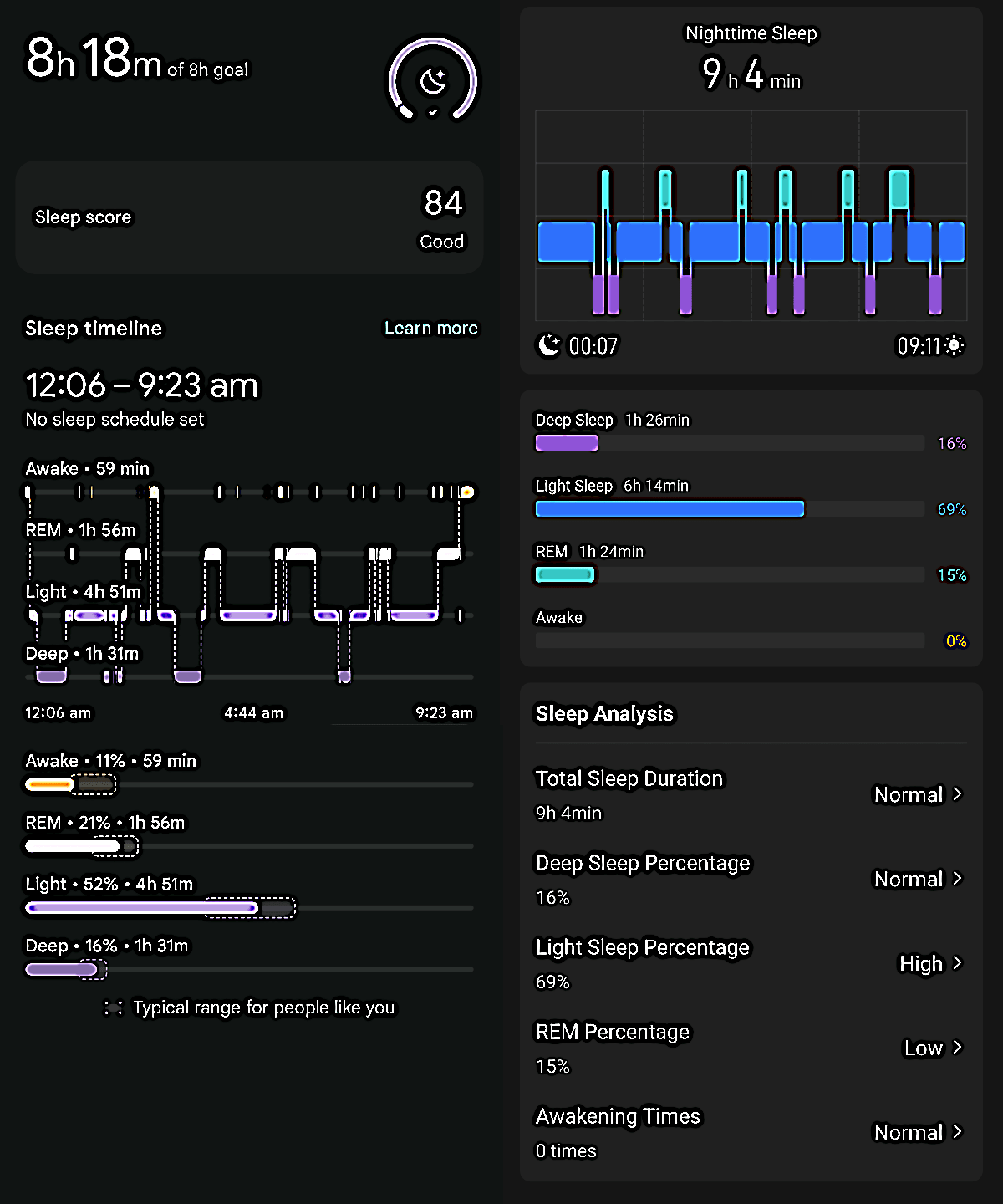
I found sleep tracking surprisingly decent versus my Pixel Watch 2 and its recently updated algorithm.
It reliably detected sleep and wake times and gave a reasonable ballpark for stages - especially deep sleep. It often missed brief awakenings (e.g., bathroom trips) and tended to classify some REM as light sleep, but overall accuracy was good.
Here’s a single‑night comparison. Night‑to‑night variation exists, but the overall trend is consistent.
Stress, emotional state and one-tap health check
This measures heart rate to derive a stress score. It seems reasonably accurate, but the usefulness is limited - more a curiosity than a tool.
As for “emotional state”, I’m not sure what it’s meant to represent or how it’s calculated, so I can’t assess its accuracy or value.
The one-tap health check feature allows you to check all of your biometrics at the same time: heart rate, blood oxygen, emotional state and stress levels. The feature does require you to stand still for a whole 60 seconds.
Fitness and Outdoor Features
Sports modes
The Kospet Magic R10 covers a wide range of activities, from running and cycling to niche sports. There are over 180 modes, including 16 Kospet calls “ApexMotion Sports Modes”, though I couldn’t find specifics beyond this PR blurb:
[ … ] 16 specialized ApexMotion sport modes - optimized for higher precision during dynamic activities such as badminton, cycling, and swimming - designed to deliver enhanced data accuracy and more responsive tracking.
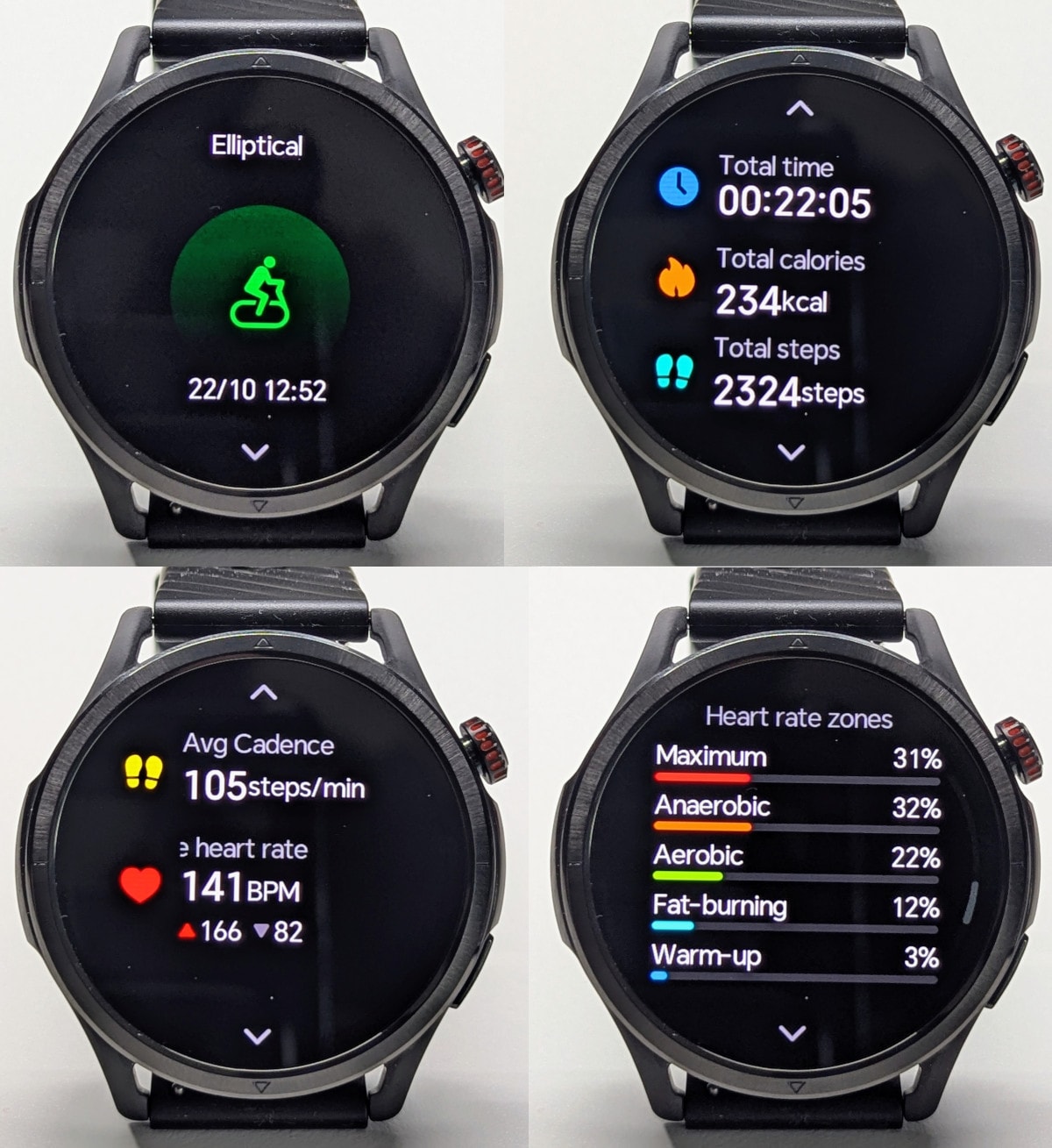
Tracking is generally solid, and much of the data is viewable right on the watch. Workout records are detailed; you’ll only need the app for maps, heart‑rate charts, and deeper graphs.
GNSS tracking, barometric altimeter and compass
GNSS is another standout on the Kospet Magic R10. The watch uses a dual‑band (L1+L5) module that supports six constellations - GPS, GLONASS, Galileo, BeiDou, QZSS, and NavIC.
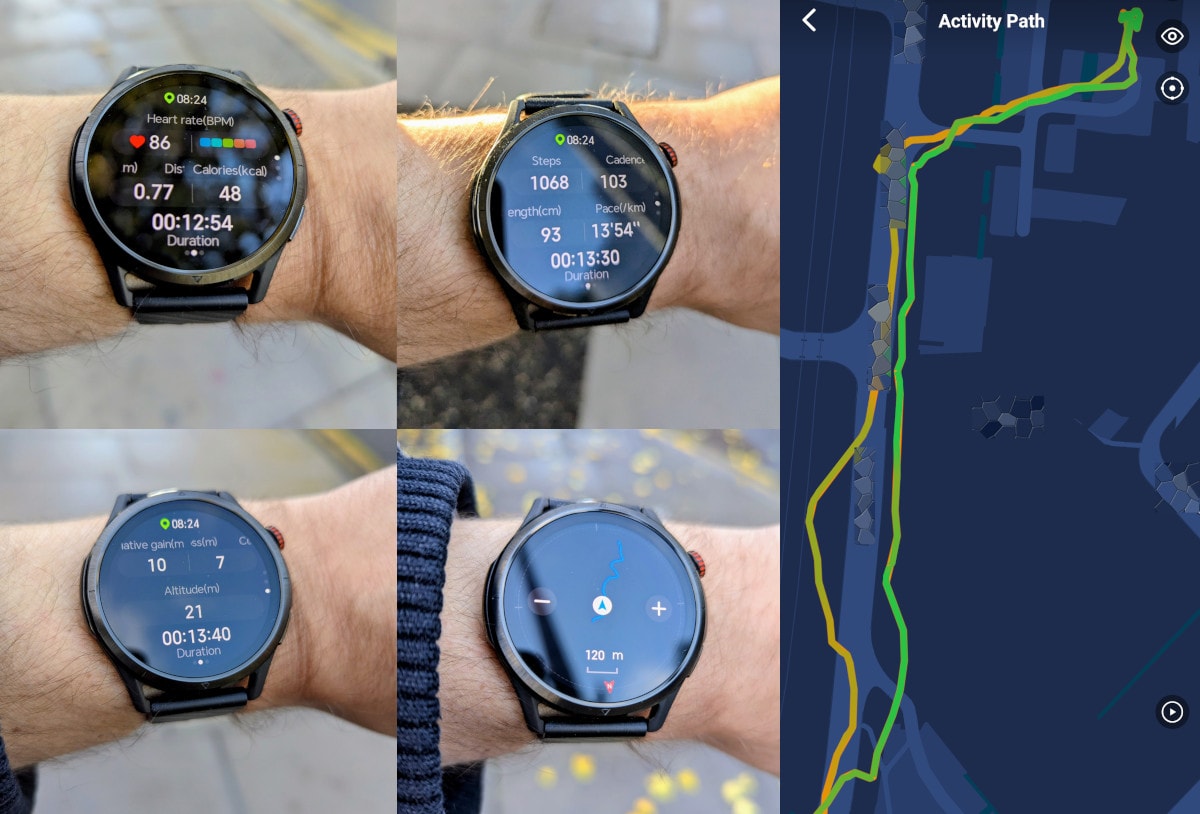
As long as it refreshes AGPS data from the app occasionally, I consistently got a fix in under 15 seconds in my city - a strong result given my high‑rise surroundings.
Tracking is fairly precise - not quite at premium‑watch levels, but more than capable in city canyons with good reliability.
Below, a city walk. The highlighted segment shows a small wobble where it thought I’d crossed the road to the west (about a 5‑meter deviation). This is the middle of a city canyon - about as bad as it gets for GNSS, but it’s otherwise usually nearly spot on.
Alongside the strong GNSS, there’s a barometric altimeter - useful outdoors, but with the usual caveats. Air pressure changes with weather, so readings drift; don’t rely on it heavily. A nice upgrade over stock GloryFitPro is GNSS‑based altimeter calibration, done manually or automatically during a GNSS‑tracked activity.
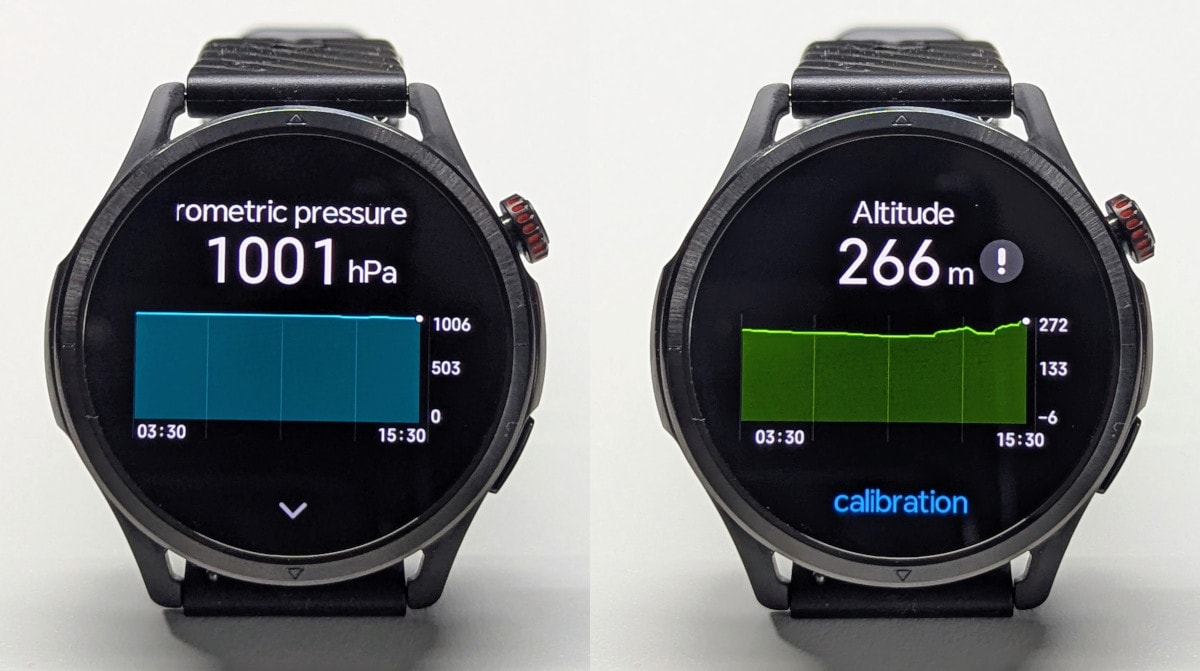
Automatic calibration works well enough; however, it’s not perfect: at activity start, the watch logs whatever uncalibrated altitude it had, skewing results. You can see this below in the outdoor walk review. I’d also love alerts for rapid pressure drops, which often signal incoming bad weather.
There’s also a compass, handy for navigation. It calibrates quickly with a figure‑eight motion and stays calibrated for quite a while. In addition to the dedicated compass app, it’s also available on the track view during GNSS‑tracked activities for better route context.
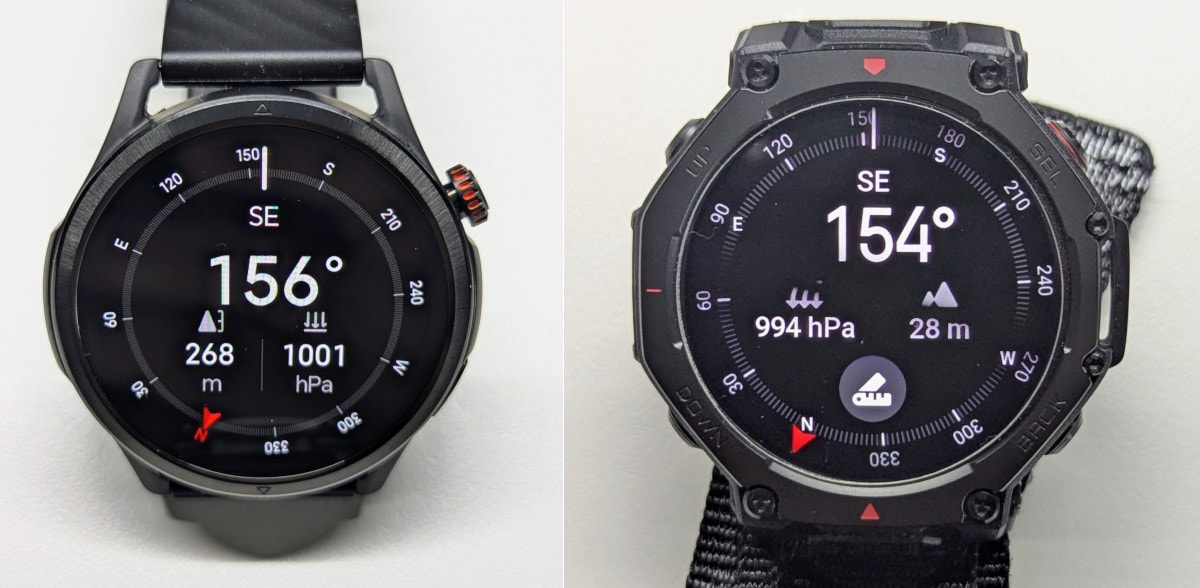
Above is the standalone compass app, next to the same view on an Amazfit T‑Rex 3 Pro - the resemblance is obvious, a recurring theme across Kospet’s firmware inherited from GloryFitPro.
Step counter
One of the most basic features on smartwatches, but here it’s done well: while many watches have a tendency to overcount at home; this one doesn’t, delivering a realistic daily tally. Activity step counts also align closely with pricier smartwatches.
Sports tracking and tests
I wore the watch for about four weeks alongside my reference device - the reliable Pixel Watch 2, known for its accurate heart-rate sensor and solid fitness tracking. I logged every walk and workout - hiking, elliptical, and strength training - then selected a few representative sessions for this review, and favoured those that were a bit less than perfect.
Overall, the metrics were quite comparable: heart rate and steps were accurate, calorie burns stayed within a reasonable range, though distance measurements showed some inconsistencies on GNSS-tracked activities. Some firmware polish, which I’m sure it would carry to other Kospet watches given the fact all the firmwares have the same lineage.
¹ “Reference” used loosely - I’m planning to add proper reference gear, like a chest strap, for future reviews.
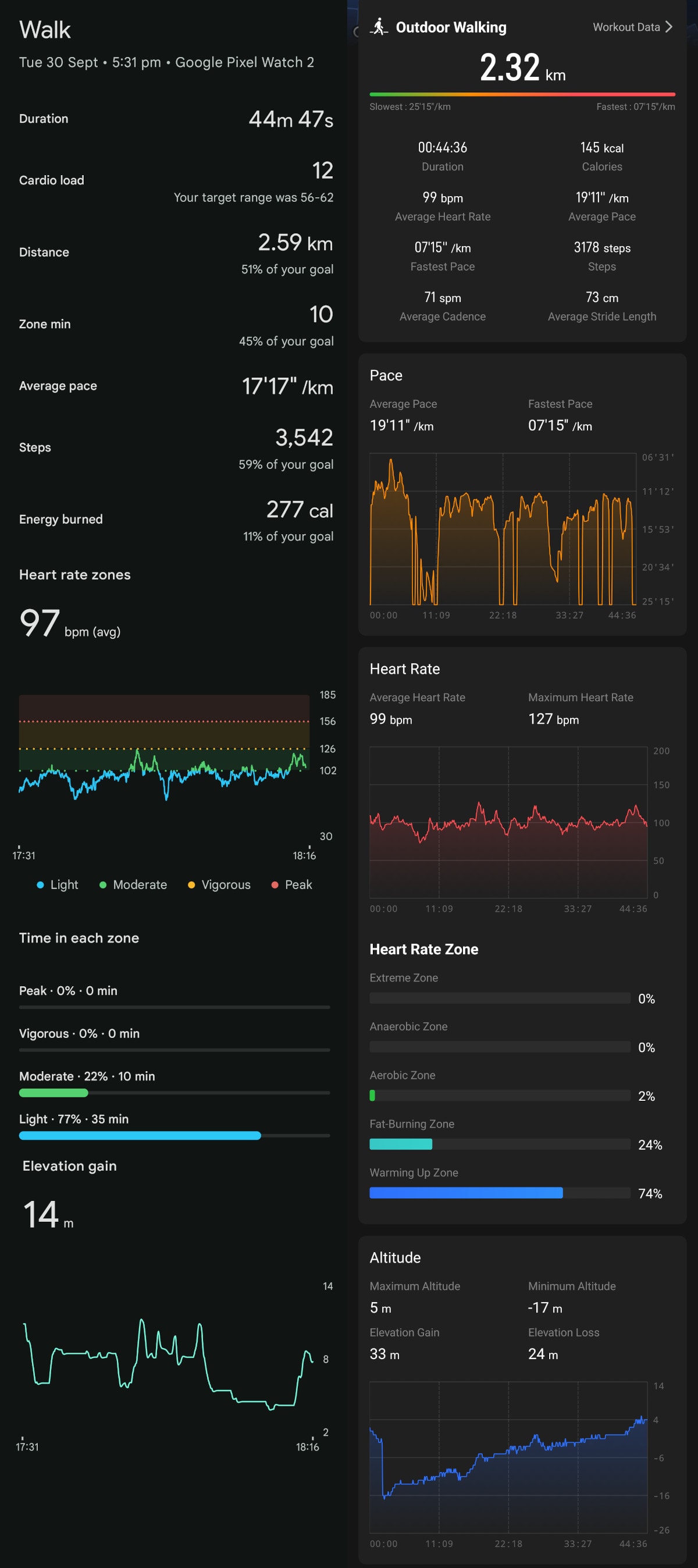
GNSS-tracked outdoor walk
Distance and steps didn’t fully agree. The step difference is understandable - I was carrying things and wore the watches on opposite arms. The distance gap is less clear: the Pixel Watch 2’s 2.59 km reading is accurate, while the Magic R10 logged 2.32 km. Despite similar GNSS traces, the R10 may have wrongly relied on step count rather than the GNSS track for distance.
The barometric altimeter calibration issue is also visible - it seems to have recalibrated via GNSS midway through the walk, when it should have done so as soon as a GNSS fix was acquired on the wait screen before starting the workout.
Elliptical crosstrainer
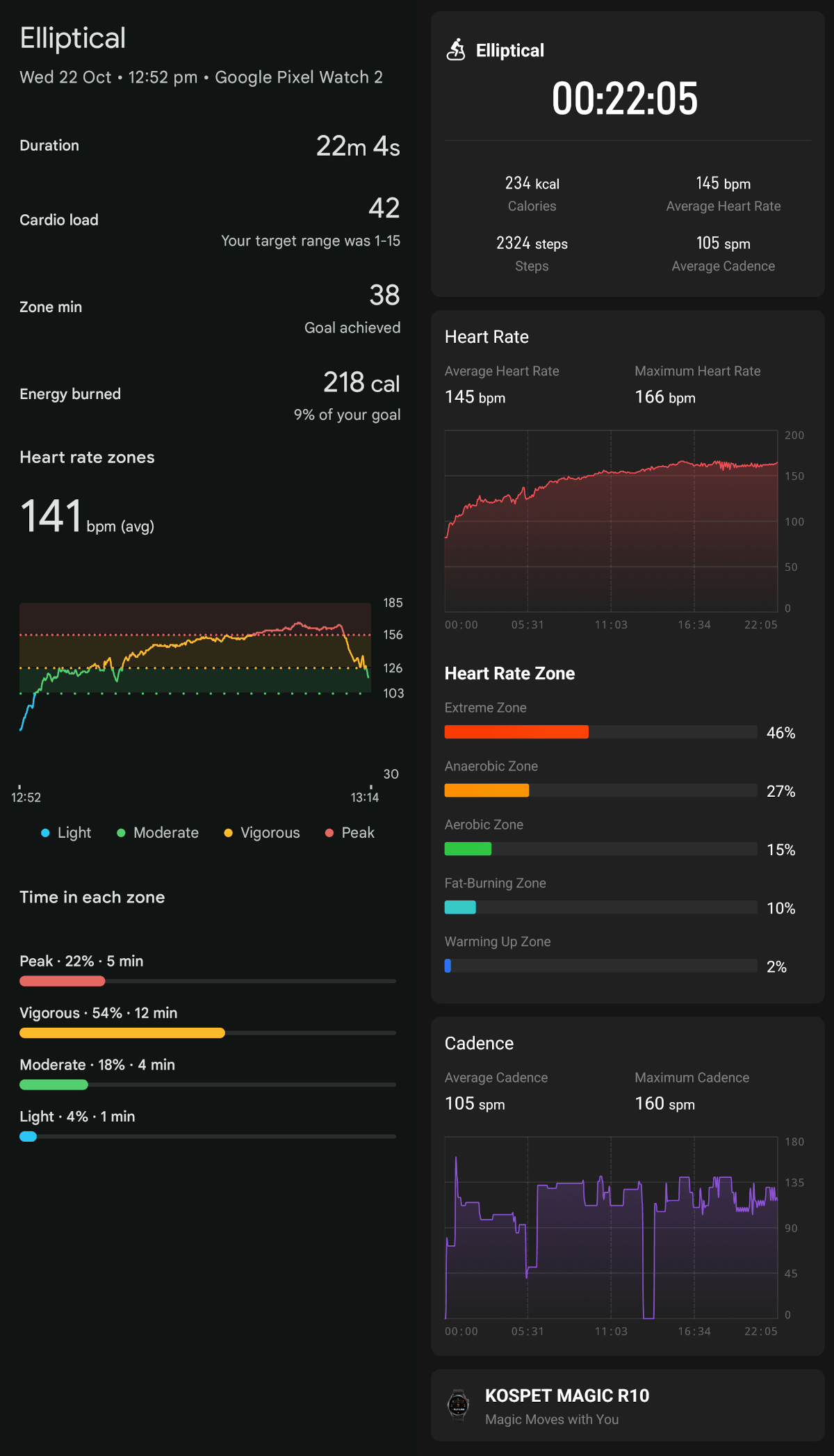
On the elliptical, metrics are simpler and alignment tighter. It’s basically a cardio workout, so accurate heart rate and calorie burn tracking are really the main metrics to consider.
I chose this particular session as it was the only one where I actually found a couple of small issues. The R10 missed a brief HR drop early on the session, where I had to step off the machine for a few seconds. The same happened during cooldown. But all in all, and across many other elliptical sessions, the tracking has been spot on.
One nice addition from the Kospet that Fitbit does not report is a step count during the session. A welcome extra.
Strength training
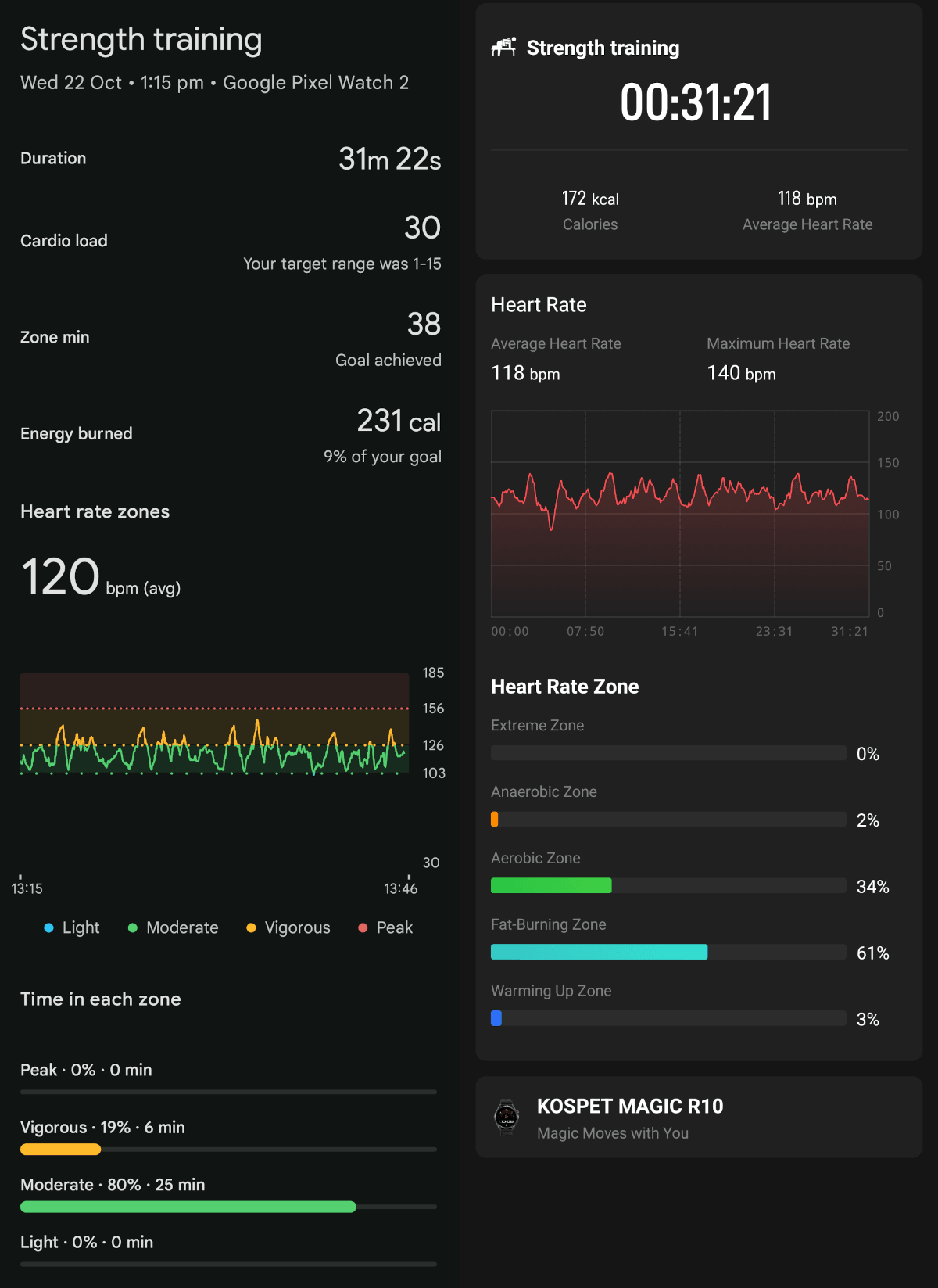
Strength training is typically tough for wrist-worn optical sensors due forearm and wrist action resulting in greater skin movement under the sensor. Heart rate during strength training is also anything but steady, with rapid increases and decreases as one works their way through their sets - this is also notoriously hard for optical heart rate sensors to catch up to.
A tip, valid for any smartwatch: ensure you wear your device higher into your forearm, at least an inch and a half away from your wristbone. Non-stretchy watch straps can also help here.
The good news is that across many different workouts, the R10 performed admirably, far better than I was expecting, capturing most peaks. The new sensor configuration has really paid off here.
Smartwatch Features
The Magic R10 covers the essentials well: notification mirroring, music controls, weather, and a handful of simple apps.
Some highlights:
-
Notifications/messages: you don’t really read long messages on the watch; it mirrors your phone’s alerts. They’re grouped by app and work reliably. WhatsApp and similar show a fair bit of text, though not as much as KrikiOS watches like the FT66. Apexmove lets you pick virtually any app to forward.
-
Alarms: set directly on the watch and very reliable. Loud, too - you won’t be sleeping through those.
-
Timers: can run in the background; vibration‑only, but the long buzz makes them hard to miss.
-
Bluetooth calling: speaker and mic are solid. Calls were clear both ways and worked flawlessly in testing.
-
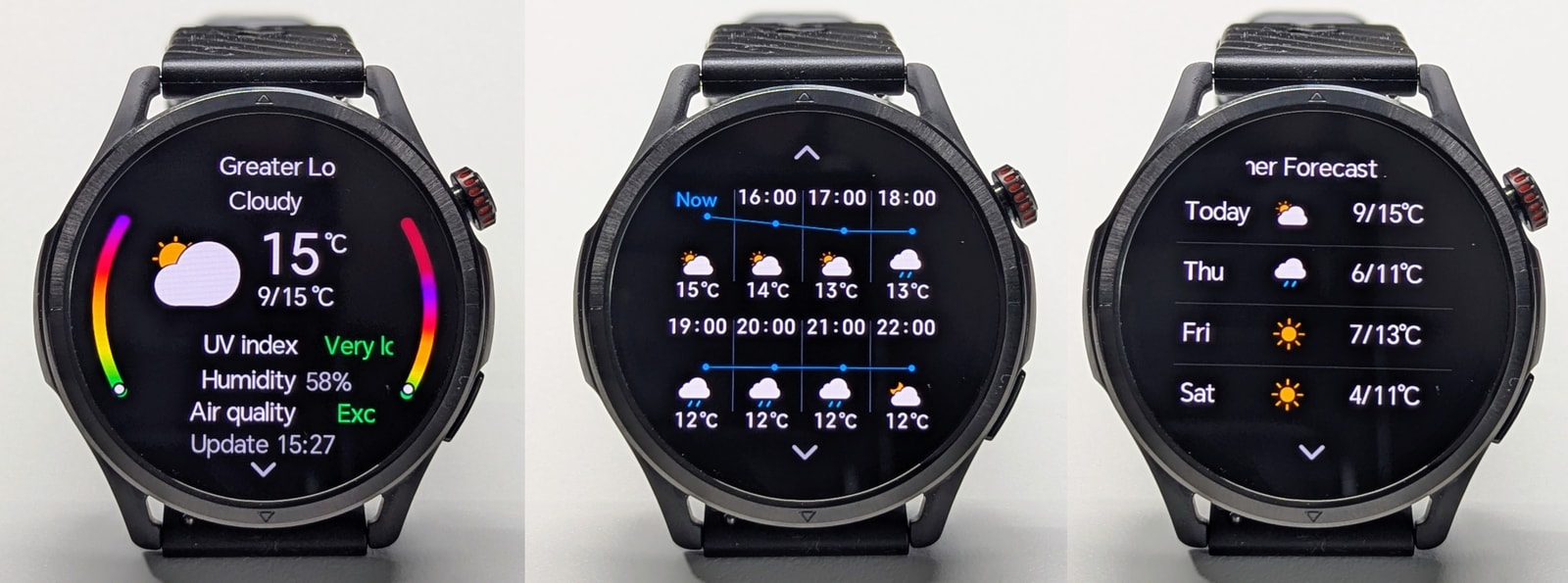
Weather: the best weather app I’ve seen on many watches, some of which are more premium: current conditions plus 12‑hour and 7‑day forecasts in a clean, readable layout.
-
Find my phone/watch: works in both directions and benefits from the watch’s strong Bluetooth range.
The app: Apexmove
Until now, Kospet used a reskinned version of GloryFitPro called Kospet Fit. With the Magic series, they launched a new app, Apexmove, which feels like a full overhaul. It’s better in nearly every respect - from vitals presentation to watch management - including pairing more than one watch to your phone.
Kospet also built its own watch‑face library. You’ll spot a few from GloryFitPro, but most appear exclusive to Kospet. Quality is high and selection is plentiful. Some faces are paid, but that’s fine given the number of excellent free options.
Connectivity is solid. The watch has impressive Bluetooth range, so notifications and calls come through reliably as you move around your home with the phone elsewhere.
Bugs, issues and feedback sent to Kospet
I ran into a few issues:
-
Raise‑to‑wake can’t be automated. On GloryFitPro watches it’s tied to Do Not Disturb (and thus automatable). I raised this with Kospet during testing (the Kospet Pulse has the same problem), but they said it’s by design. Annoying, as you need to toggle it manually each day - or the display will wake and light up your room at night whenever you move.
-
On several occasions Apexmove lost health data: it disappeared from the app while still present on the watch and wouldn’t sync back despite refreshes. This also happened while testing the Kospet Pulse.
-
The previously mentioned auto‑brightness issue. I didn’t receive confirmation that this would be addressed.
I reported everything through the app. Kospet has been responsive, but to my knowledge no fixes have been released yet.
Conclusion
Kospet’s Magic R10 lands in a sweet spot for everyday and fitness‑minded users who don’t want the overhead of Wear OS or watchOS. The hardware feels a class above typical budget watches: a crisp 1.43‑inch AMOLED, smooth crown, and the newer ATS3085S MCU make the interface fast and pleasant. Battery life is a headline win - about nine days per charge in my heavy use - and GNSS performance is strong for the price, with quick fixes and reliable city tracking.
Health features are solid for a non‑medical device. The new heart rate sensor tracks well during both steady work and spiky cardio workouts, coping with strength training sessions rapid heart rate changes, though cold‑start spikes exist and there’s no true continuous HR option. Sleep tracking is surprisingly decent. Sports coverage is broad, records are detailed on‑watch, and the barometric altimeter adds context - albeit with a calibration quirk at activity start.
That being said, it’s not without its issues: auto‑brightness is too conservative indoors, and my unit showed minor QC issues that unfortunately reduces the final score quite a bit. Even so, at around £150, the Magic R10 is really good value, even though at this price range you do have more featureful options from other brands. Kospet do often run discount campaigns, so deals are to be had if you keep your eyes open.
Because of the above, and despite some of those caveats, I absolutely love wearing this watch - indeed, I have a growing list of watches to review, but I periodically go back to wearing the R10 just because it feels and looks so good on my wrist.